
0%

China has become a major sourcing center for Adjustable Weight Benches, serving gyms, distributors, and home-training brands worldwide. This guide examines manufacturers beyond attractive catalogs and low initial prices. A bench must remain stable when loaded, adjusted, folded, and transported repeatedly.

Dan John, a respected strength coach and author, often says, “The goal is to keep the goal the goal.” That principle applies to equipment selection. A reliable bench should support safe, repeatable training before adding decorative features. Buyers should inspect frame steel, weld consistency, backrest angles, ladder design, padding density, and maximum tested capacity. Small details matter. A loose adjustment pin can change a confident press into an unsafe movement.

China’s best manufacturers usually provide OEM development, sample production, logo customization, packaging support, and quality inspection records. Yet the market is uneven. Some factories communicate clearly but offer limited testing. Others show impressive equipment but provide weak documentation. Photos can mislead. A factory visit or independent pre-shipment inspection may reveal uneven weld beads, thin tubing, or upholstery that compresses too quickly.

This overview compares manufacturers through practical evidence, not exaggerated claims. It considers production experience, engineering capability, export reliability, certifications, and after-sales communication. Readers should still verify current specifications directly. Suppliers change materials, subcontractors, and prices. That reality deserves attention.

The strongest Adjustable Weight Benches manufacturers are not always the cheapest. They are the companies that explain limitations honestly, control production consistently, and respond when problems appear. A careful buyer may spend more initially, yet reduce returns, warranty disputes, and damaged customer trust.
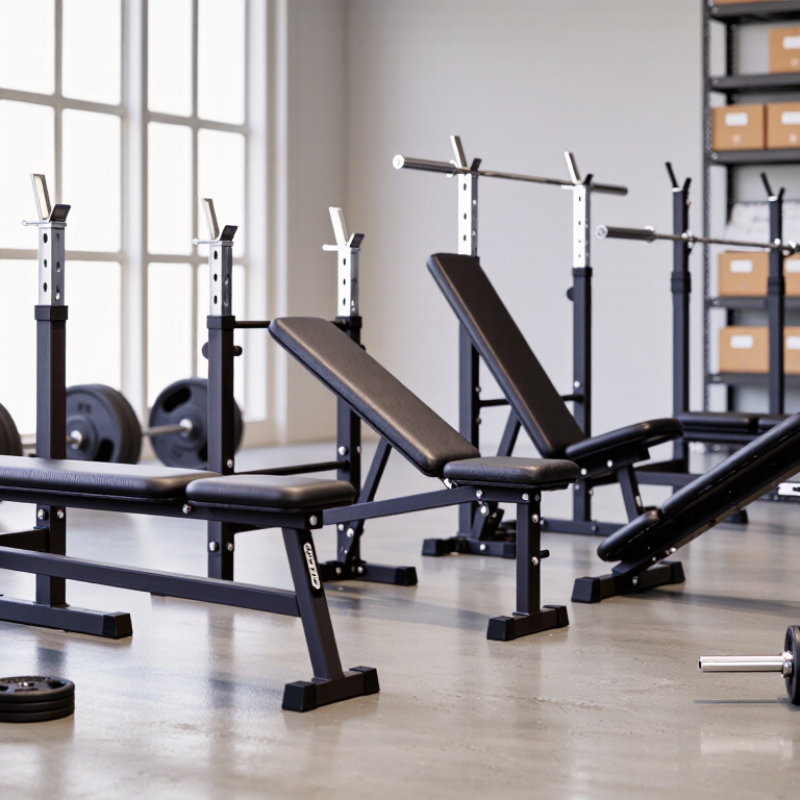
China Top Adjustable Weight Benches Manufacturers

Adjustable Weight Bench Manufacturing in China

China Top Adjustable Weight Benches Manufacturers

China’s adjustable weight bench manufacturing combines metalworking, upholstery, and load testing in one supply chain. Experienced factories usually begin with steel tube selection, then control cutting, welding, and surface treatment. A stable frame matters more than a glossy finish. Engineers check hinge alignment because a small gap can create movement during pressing. Many workshops build prototypes before mass production. This practical step reveals weak welds, unstable feet, or uncomfortable back angles. Still, not every factory documents failures well. That is an area buyers should question.

Reliable manufacturers use measurable standards for backrest positions, pad density, and weight capacity. They may inspect weld penetration, bolt torque, coating thickness, and foam recovery. Third-party testing can add confidence, but factory records remain useful for tracing each batch. Adjustable mechanisms should move smoothly without sudden drops. A bench should also remain steady on slightly uneven flooring. This detail is often overlooked. Production teams with export experience can usually provide drawings, sample approvals, packaging tests, and replacement-part plans. Clear communication reduces costly changes after production begins.

Tips: Ask for material specifications, test reports, and a sample video showing every adjustment. Confirm the rated load includes the user and lifted weight. Check folded dimensions before shipment. Request photos of welds and underside supports. If a supplier avoids basic measurements, reconsider the order. I would also test several samples, not one. One perfect sample proves very little.

Types of Adjustable Weight Benches and Their Key Features

China Top Adjustable Weight Benches Manufacturers

Adjustable weight benches usually fall into four practical types. Flat-to-incline models support pressing, rowing, and seated dumbbell work. FID benches add decline positions for broader exercise programming. Utility benches often include leg developers or preacher attachments. Foldable benches save space, but their hinges need careful inspection.

Key features determine real training quality. A seven-position ladder can offer quick angle changes, while a pin system may feel more secure under heavier loads. Look for dense foam, reinforced stitching, and a firm back pad. The pad gap should remain small when the bench is flat. Wide rubber feet reduce movement on smooth floors. Transport wheels help in compact home gyms. Small details matter.

ACSM’s 2025 Worldwide Survey placed traditional strength training among the leading fitness trends, supporting continued demand for versatile benches. Grand View Research has also reported steady expansion in the global home fitness equipment market, driven by convenient strength training at home. These reports show market direction, not automatic product quality. In practical inspections, I would check weld consistency, bolt access, frame alignment, and stated load testing. Some manufacturers list impressive capacities without explaining test conditions. That deserves reflection. An adjustable bench may look strong, yet a loose ladder or narrow base can reduce user confidence quickly.

China’s Leading Adjustable Weight Bench Manufacturers

China’s Leading Adjustable Weight Bench Manufacturers

China’s leading adjustable weight bench manufacturers combine practical engineering with high-volume production experience. Their facilities commonly manage cutting, welding, surface treatment, upholstery, and final assembly under one quality system. This structure can shorten production cycles and improve communication between technical teams.

A reliable manufacturer studies how users move, not only how a bench looks. Engineers check frame stability, backrest angles, hinge strength, and pad compression during repeated testing. A commercial bench may receive load checks, adjustment-cycle tests, and packaging inspections before shipment. Clear drawings and sample approval help buyers confirm dimensions, materials, and acceptable tolerances.

Details matter.

Steel thickness should match the intended training environment. Dense foam should support the body without feeling rigid. Locking pins must engage smoothly and remain secure during movement. Many manufacturers also offer custom colors, pad materials, logos, and carton specifications for wholesale projects.

However, no production process is perfect. Minor stitching variation or paint inconsistency may still appear between batches. Experienced suppliers document these issues and improve their inspection points instead of hiding them. Buyers should request test records, production samples, factory photos, and corrective-action reports. Communication can still fail when specifications are vague. A precise checklist protects both sides and makes quality easier to measure.

China Top Adjustable Weight Benches Manufacturers - China’s Leading Adjustable Weight Bench Manufacturers
Manufacturer Profile Typical Product Focus Backrest Adjustment Seat Adjustment Typical Weight Capacity Frame Material Common Tube Specification Pad Construction Surface Finish Quality & Compliance Options Typical MOQ Typical Production Lead Time
Profile A Compact adjustable benches for home gyms and apartment fitness rooms 6 positions, approximately 0° to 85° 3 positions, approximately 0° to 30° 250–300 kg combined user and load capacity Carbon steel Approximately 50 × 75 mm rectangular tubing Approximately 50–65 mm high-density foam with reinforced upholstery Powder coating with corrosion-resistant pretreatment Load testing, weld inspection, and optional EN 20957 testing 50–100 units 30–45 days after sample approval
Profile B Commercial-grade benches for gyms, hotels, and training studios 7 positions, approximately -15° to 85° 3 positions, approximately 0° to 30° 350–450 kg combined user and load capacity Heavy-duty carbon steel Approximately 50 × 100 mm rectangular tubing Approximately 65–75 mm multi-layer foam with double-stitched cover Textured powder coating for improved scratch resistance Static load testing, fatigue testing, batch inspection, and EN 20957 option 30–80 units 35–55 days after technical confirmation
Profile C Heavy-duty Olympic benches designed for rack and barbell training 8 positions, approximately -20° to 85° 4 positions, approximately 0° to 35° 450–600 kg combined user and load capacity High-strength carbon steel Approximately 60 × 100 mm rectangular tubing Approximately 70–80 mm firm foam with abrasion-resistant vinyl Commercial powder coating with protected weld areas Load-cycle testing, dimensional inspection, weld inspection, and packaging testing 20–50 units 45–60 days after pre-production approval
Profile D Space-saving folding benches for residential and online retail channels 5 positions, approximately 0° to 80° 2 positions, approximately 0° to 25° 200–250 kg combined user and load capacity Carbon steel with reinforced hinge assemblies Approximately 40 × 80 mm rectangular tubing Approximately 45–60 mm foam with moisture-resistant upholstery Powder coating with compact folded-frame protection Hinge-cycle testing, stability testing, load testing, and carton drop testing 100–200 units 30–45 days after packaging approval
Profile E OEM and private-label adjustable benches with customized dimensions 6–10 positions according to design specification 2–5 positions according to design specification 250–500 kg, depending on frame design Carbon steel or stainless-steel components by specification Approximately 50 × 75 mm to 60 × 100 mm tubing Customized foam density, thickness, logo placement, and cover material Custom color powder coating or approved painted finish Prototype approval, incoming inspection, in-process inspection, and final AQL inspection 100–300 units 45–75 days for customized production
Profile F Premium benches with fast adjustment systems and accessory compatibility 8–10 positions, approximately -20° to 90° 4–6 positions, approximately 0° to 35° 400–600 kg combined user and load capacity High-strength carbon steel with machined adjustment parts Approximately 60 × 100 mm rectangular tubing Approximately 70–90 mm molded or multi-layer foam construction Premium textured powder coating with zinc-plated hardware Fatigue testing, stability testing, load testing, material traceability, and EN 20957 option 20–50 units 50–70 days after engineering approval
Note: The figures show common capability ranges for China-based adjustable weight bench manufacturing and should be verified through technical drawings, samples, load-test reports, and final inspection before purchase.

Manufacturing Standards, Materials, and Quality Control

Adjustable weight bench manufacturers must treat safety as a measurable process, not a marketing phrase. EN ISO 20957 requires fitness equipment to manage stability, strength, and repeated loading risks. ASTM F1250 also addresses stationary exercise equipment safety. A reliable factory documents weld penetration, hinge movement, pin engagement, and frame deflection during testing. Small gaps matter.

Material selection directly affects service life. High-tensile steel tubing supports rigid frames, while powder-coated surfaces resist sweat and transport scratches. Stainless or zinc-plated adjustment pins reduce corrosion around frequently handled joints. Dense foam should recover after compression, but suppliers should verify its thickness and resilience in production batches. A soft pad can feel comfortable today and fail quickly tomorrow.

Quality control needs traceable checkpoints. Inspectors should measure hole spacing, weld consistency, bolt torque, backrest angles, and load performance. The Global Wellness Institute’s 2024 report valued the physical activity economy at about 1.1 trillion dollars in 2022. Demand is expanding, yet rapid output can weaken inspection discipline. One factory audit may reveal uneven stitching or a pin that does not fully lock. That is not a minor defect. It deserves correction, retesting, and honest supplier review.

How to Select a Reliable Chinese Bench Supplier

Selecting a reliable Chinese adjustable weight bench supplier requires more than comparing online prices. Visit the factory, or request a live video inspection. Check the welding area, steel storage, assembly lines, and final inspection process. A clean workshop is useful evidence, but it is not proof alone. Ask who performs load testing and how results are recorded.

Request a production sample before signing a large order. Test the backrest angles, adjustment pins, hinges, and frame stability under repeated movement. The bench should feel firm, not merely look strong in photographs. Ask for steel thickness, foam density, upholstery specifications, and maximum user weight. That sounds simple. However, vague answers often reveal weak technical control.

I once focused too heavily on a low quotation and overlooked packaging details. Several cartons arrived with scratched frames and compressed padding. The supplier corrected the packing method, but the delay affected our delivery schedule. Now I review carton strength, corner protection, spare parts, inspection photos, and replacement procedures. Confirm lead times in writing, including sample approval and peak-season delays. Clear communication matters as much as equipment quality. A dependable supplier shares measurable standards, accepts reasonable questions, and investigates mistakes instead of hiding them. Also check whether the factory can maintain consistent quality across different production batches.

China Top Adjustable Weight Benches Manufacturers: How to Select a Reliable Chinese Bench Supplier

A practical procurement evaluation model for comparing adjustable weight bench suppliers. The percentages represent recommended decision priorities when reviewing product quality, factory capability, delivery performance, and support.

Before placing an order, verify load-test records, material specifications, inspection reports, production capacity, lead-time history, packaging standards, warranty terms, and spare-parts support.

FAQS

What are the main types of adjustable weight benches?

Flat-to-incline benches support pressing, rowing, and seated dumbbell exercises. FID benches also include decline positions. Utility benches may add leg developers or preacher attachments. Foldable models save space but require careful hinge checks.

How do adjustment systems affect bench performance?

Ladder systems allow quick angle changes during training. Pin systems can feel more secure under heavier loads. Check that pins fit tightly and move smoothly. Small looseness matters.

What padding features should buyers inspect?

Look for dense foam, reinforced stitching, and a firm back pad. The pad gap should stay small when the bench is flat. Compressed padding may reduce comfort and support.

How can a bench remain stable on smooth flooring?

Wide rubber feet help reduce movement on polished or smooth floors. A broad base usually improves confidence during pressing. Transport wheels are useful in compact home gyms, but they should not weaken stability.

What should buyers check before ordering from a supplier?

Request steel thickness, foam density, upholstery details, and maximum user weight. Ask how load tests are performed and recorded. Impressive capacity numbers need context.

Is a clean factory enough to prove supplier reliability?

No. A clean workshop is useful evidence, but it proves little alone. Request a live video inspection or factory visit. Check welding areas, steel storage, assembly lines, and final inspection procedures.

Why should buyers request a production sample?

A sample reveals problems hidden in photographs. Test backrest angles, adjustment pins, hinges, and frame stability repeatedly. The bench should feel firm, not merely look strong.

How can packaging problems affect an adjustable bench order?

Weak cartons may cause scratched frames or compressed padding during transport. Inspect corner protection, spare parts, and replacement procedures. I once underestimated packaging. The delivery delay was avoidable.

Conclusion

China has become a major source of adjustable weight benches, offering diverse designs for home gyms, commercial fitness centers, and professional training facilities. Adjustable Weight Benches are available in flat-to-incline, incline-to-decline, folding, and multifunctional models, with features such as multiple backrest positions, strong frames, stable bases, comfortable padding, transport wheels, and weight capacities suited to different users. Chinese manufacturers typically support customized dimensions, colors, upholstery, packaging, and functional configurations to meet specific market requirements.

Reliable production depends on durable steel, high-density foam, wear-resistant upholstery, precise welding, and consistent surface finishing. Effective suppliers should follow clear manufacturing standards, conduct inspections for frame strength, weld quality, stability, adjustment mechanisms, and load performance, and maintain traceable quality-control procedures. When selecting a Chinese supplier, buyers should evaluate factory capabilities, production experience, customization support, certifications, sample quality, communication, lead times, packaging, and after-sales service. A careful comparison of these factors can help purchasers secure safe, durable, and cost-effective bench solutions.

Amelia

Amelia

Amelia is a marketing professional with a strong understanding of the company’s products and the needs they are designed to address. She regularly contributes expert articles to the company website, turning product knowledge and industry insights into clear, practical guidance for readers. Her work......