
Choosing the right Commercial Power Racks in 2026 means looking beyond steel thickness and polished photos. The rack must suit the people using it, the room around it, and the work your facility actually supports. A busy training floor has different needs from a small private studio. Measure the ceiling, floor space, and clearances before comparing models. A few inches matter.
Mark Rippetoe, a longtime strength coach, expresses a broader training principle in Starting Strength: “Strong people are harder to kill than weak people, and more useful in general.” That is not a rack specification, but it highlights why dependable training equipment matters. Inspect upright dimensions, hole spacing, safeties, pull-up options, and stated load ratings. Check how attachments fit, too. A useful rack should support routine adjustments without making setup awkward.
Then consider the daily details: Can staff move a bench inside easily? Do spotter arms lock securely? Is the finish likely to withstand repeated contact with plates and bars? Ask vendors for documentation, warranty terms, and installation guidance, and verify that the information matches the exact model. Looks can mislead. Even experienced buyers can overlook workflow or future maintenance. No single rack is best for every facility. This guide compares the factors that shape a sound purchase, while noting where trade-offs deserve a second look.
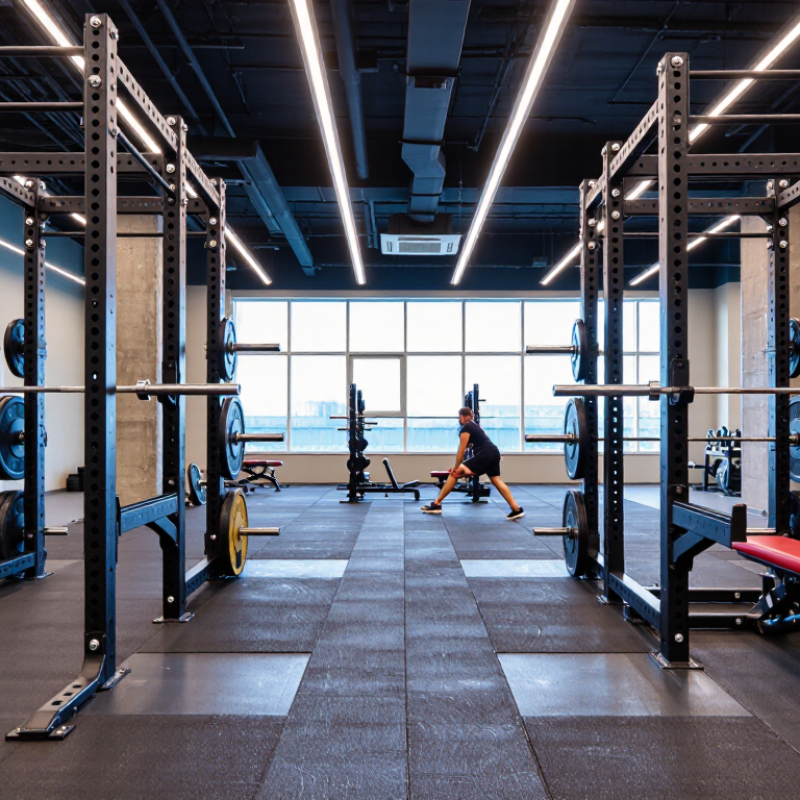
Commercial power racks are steel frames built to support barbell training in busy gyms, schools, and performance facilities. Uprights hold adjustable hooks and safety bars, while crossmembers keep the frame stable. A typical session might move from squats to bench presses, with the bar reset at a different height between lifts. Some racks also include pull-up bars or storage for plates.
Their main use is to create a controlled space for compound lifts. Safety bars can catch a barbell if a lifter cannot complete a repetition, but they must be set near the right height. Too low, and they may not help; too high, and they can interrupt the lift. That matters. Racks also let coaches supervise several users, although a rack alone does not replace sound instruction or attentive spotting.
For commercial use, consider how people will move around the rack, not only its listed features. Measure ceiling height, floor space, and access to loading areas. Check that the frame suits the facility’s floor and expected training volume, and inspect bolts, welds, hooks, and safeties regularly. Keep it simple. A heavily equipped rack may look impressive, yet unused attachments can crowd a shared training area. The best setup depends on who trains there, how often the rack is used, and whether staff can maintain it consistently.
| Rack Type | Typical Construction | Main Uses | Space Requirement | Safety and Selection Notes |
|---|---|---|---|---|
| Full power rack | Four upright posts connected by crossmembers, with adjustable bar catches and safety bars or straps. | Squats, bench presses, overhead presses, and other barbell lifts; suitable for solo training when correctly configured. | High. Requires room for the rack, a lifting platform or floor area, and safe access around the equipment. | Check the rack’s stated load ratings, dimensions, anchoring requirements, and compatibility with the intended bar and accessories. |
| Half rack | A pair of uprights supported by a base and crossmembers, generally with adjustable bar catches and optional safety arms. | Squats, presses, and other barbell exercises where an open lifting area is useful. | Moderate. The open design can make the surrounding area easier to access, but safe clearance is still needed. | Use compatible safety arms for lifts performed without a spotter. Follow installation and anchoring instructions. |
| Wall-mounted folding rack | Folding uprights attach to a suitable structural wall and can be folded back when not in use. | Barbell training in smaller studios or multipurpose rooms where reclaiming floor space is important. | Low when folded; requires clear operating space when open. | Confirm that the wall structure and fasteners meet the installation requirements. Do not mount to an unsuitable partition wall. |
| Open training rack | An open-frame arrangement of uprights and supports, often configured for one or more lifting positions. | High-throughput strength areas, coached sessions, and training spaces that need easy entry and exit. | Moderate to high, depending on the number of stations and the layout. | Plan for clear walkways and separate lifting zones. Verify that each station has appropriate catches or safeties. |
| Modular multi-station rack | Multiple connected uprights and bays, with configurable pull-up bars, storage, and accessory attachment points. | Commercial weight rooms serving several users or training groups at the same time. | High overall, but can use floor space efficiently by combining stations and storage. | Check the configuration-specific ratings, connection hardware, floor anchoring, and clearance between simultaneous users. |
| Selection checklist: Match the rack to available floor space, expected users, training exercises, ceiling height, floor and wall conditions, and required accessories. Load capacities and installation requirements vary by model and configuration; always follow the equipment manufacturer’s specifications and applicable facility safety procedures. | ||||
It provides a controlled space for compound lifts, such as squats and bench presses. Safety bars can catch a barbell if a lift cannot be completed.
Set them close to the right height for each lift. Too low may offer little help; too high may interrupt the movement. Check before lifting.
Look for rigid uprights, stable feet, secure joints, and clean welds. Hole spacing and adjustment systems also affect everyday use.
Measure ceiling height, floor space, and bar clearance. Allow room for plate storage and people moving around a loaded bar.
Confirm whether a rating covers the full rack, each pair of uprights, or one attachment. Check if it assumes evenly distributed weight. Ratings do not describe every setup.
No. Joint design and the full structure matter too. I would not rely on one measurement alone.
Check whether the floor is uneven. Leveling or a different installation surface may help, but follow the installation instructions.
Not necessarily. Unused attachments can crowd a shared training area. Keep it simple, and choose features staff can maintain.
Inspect bolts, welds, hooks, and safety bars regularly. Also confirm that the frame suits the facility’s floor and expected training volume.
Choosing the right Commercial Power Racks starts with understanding how they will be used, from strength training and supervised coaching to busy multi-user facilities. Consider the exercises your rack must support, how many people may use it at once, and the floor space available. These needs will help determine the appropriate configuration, dimensions, and capacity.
Compare construction quality and load ratings, then assess safety features such as secure bar catches and reliable adjustment mechanisms. Check that the rack works with the accessories and equipment you plan to use, and confirm that installation and routine maintenance are manageable. Finally, review warranty coverage and the full ownership cost, including setup and upkeep. A careful comparison helps you select a rack that fits your facility, supports safe and effective training, and offers dependable long-term value.
