
0%

Choosing Collegiate Strength Training Equipment requires more than comparing prices or counting weight plates. A university facility must support athlete development, daily traffic, coaching efficiency, and safe movement. The NCAA’s 2023-24 Sports Sponsorship and Participation Rates Report recorded more than 520,000 student-athletes across championship sports. That scale matters. One broken cable, crowded rack, or poorly planned lifting lane can affect many training sessions.

Professional guidance supports a practical approach. The National Strength and Conditioning Association emphasizes needs analysis, athlete goals, supervision, and risk management when designing strength programs. ACSM’s Worldwide Survey of Fitness Trends has also kept free-weight and strength-focused training among leading industry priorities. These reports do not provide a perfect equipment checklist. They offer useful direction. Real decisions still depend on team size, sport demands, facility layout, and maintenance capacity.

Vern Gambetta, a respected strength-and-conditioning authority, states, “The goal of strength and conditioning is to prepare the athlete for competition.” That principle should guide every purchase. A football program may need heavy-duty racks, platforms, specialty bars, and high-load storage. A smaller Olympic-sport program may value adjustable benches, cable systems, dumbbells, and compact sleds. Measure the room first. Count peak users. Ask coaches what athletes actually need. A polished showroom can hide weak warranties, difficult repairs, or poor adjustability. I have seen equipment choices look impressive on paper yet perform awkwardly during busy sessions. That is worth admitting. The best Collegiate Strength Training Equipment is not always the newest. It is dependable, adaptable, serviceable, and appropriate for the athletes using it every day.
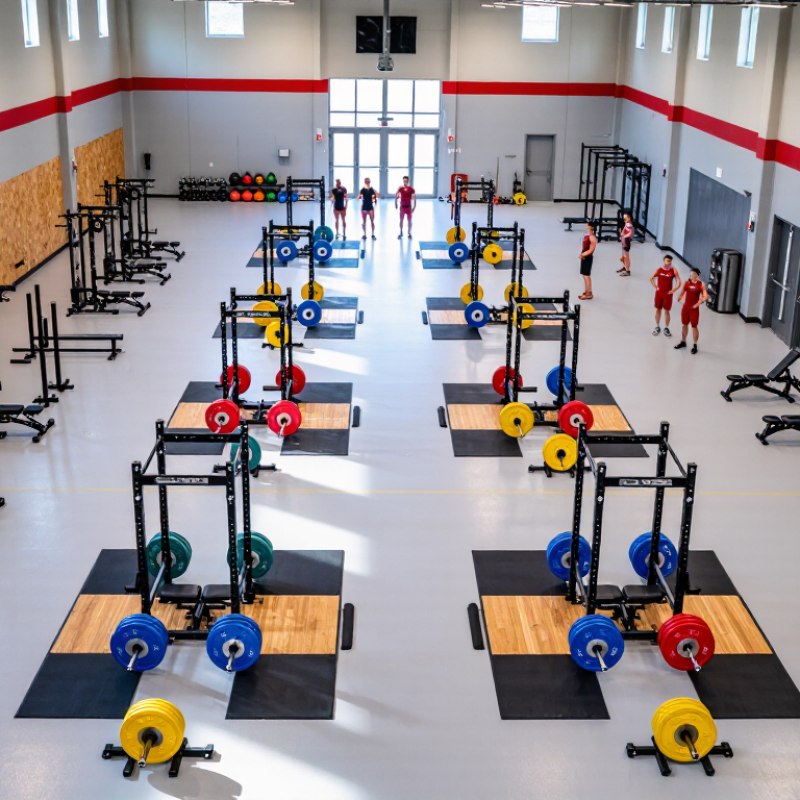
How to Choose Collegiate Strength Training Equipment

Define Training Goals and Athlete Requirements

Choosing collegiate strength training equipment starts with a clear definition of training goals. Athletes may need maximal strength, explosive power, speed, stability, or injury resilience. These goals require different equipment choices. A football lineman may need heavy resistance and safe bracing options. A volleyball player may need jump testing tools, light resistance, and landing practice space. The equipment should serve the program, not dominate it.

During facility planning, coaches should assess athlete numbers, training age, body sizes, and medical limitations. A beginner cannot use every tool safely without instruction. Adjustable racks, platforms, benches, cable systems, and varied resistance loads can support wider needs. Measure the room carefully. Leave enough space for spotting, walking, and emergency access. Small details matter, especially when several teams train together.

I once overestimated how much specialized equipment a developing group needed. It looked impressive, but basic movement coaching produced better results. That mistake still influences my decisions. Coaches should review injury records, attendance patterns, and testing data before purchasing equipment. They should also ask athletes what feels stable, uncomfortable, or confusing. Reliable equipment needs regular inspections, clear loading limits, and simple maintenance records. Goals may change during a season. The facility must allow those changes without creating unnecessary risk.

How to Choose Collegiate Strength Training Equipment

Equipment goal coverage based on five common collegiate training requirements: maximal strength, power development, hypertrophy, movement quality, and conditioning.

The score represents how many of the five training goals each equipment category can directly support through commonly used collegiate exercises. Prioritize racks, barbells, benches, and free weights when building a versatile strength area; add cable systems, sleds, or medicine balls according to athlete requirements and sport-specific conditioning needs.

Assess Equipment Types, Functions, and Training Applications

Choosing collegiate strength equipment requires more than comparing steel thickness or maximum load. Assess each item by function and training application. Racks support squats, presses, and supervised testing. Platforms manage impact and noise. Dumbbells allow unilateral work, while cables offer controlled angles and adjustable resistance. Benches need stable pads, clear spotting access, and suitable height.

Traditional strength training ranked fifth in the American College of Sports Medicine’s 2024 Worldwide Survey of more than 2,000 professionals. That finding supports broad equipment planning, not automatic overbuying. A busy room needs fast adjustments, visible storage, and enough stations for team rotations. Small load increments matter for beginners and returning athletes. Safety first. Measure twice.

The Sports & Fitness Industry Association’s 2024 Topline Participation Report recorded 242.2 million Americans taking part in at least one sport or fitness activity during 2023. Collegiate facilities should therefore serve varied abilities, not only advanced lifters. Check flooring, ventilation, accessibility, cleaning access, and maintenance schedules. Digital tracking can support progress, but it should not replace coaching judgment. I would not treat versatility as value by itself; unused attachments still consume space and budget. A quieter cable station may improve instruction more than another heavy rack. The correct choice remains imperfect, especially when teams share limited rooms and changing programs.

Compare Quality, Safety, Durability, and Maintenance Needs

Choosing collegiate strength equipment requires more than comparing prices. Quality begins with steel thickness, weld consistency, and stable adjustment points. In a university gym, hundreds of athletes may use one rack each day. I inspect frame movement, sharp edges, cable alignment, and grip comfort before approving equipment. A smooth finish matters, but hidden stress points matter more. Request load-testing records and clear safety information from the supplier.

Safety features should support real behavior, not ideal behavior. Look for secure locking pins, visible weight limits, dependable spotter arms, and non-slip feet. Durability depends on repeated impact, sweat, transport, and poor storage habits. Powder coating can resist corrosion, yet it will not repair neglected bolts. Maintenance should remain practical for campus staff. Check whether pads, cables, bearings, and fasteners can be inspected and replaced easily. Create a weekly inspection log and record unusual noise immediately. Still, no checklist catches everything. Staff judgment remains essential.

Tips: Compare identical exercises across several units, not just showroom appearance. Ask technicians how often parts need adjustment. Test equipment with different heights, shoe types, and movement patterns. Leave walking space around every station. I would also budget for replacement parts, because ignoring them becomes expensive.

How to Choose Collegiate Strength Training Equipment - Compare Quality, Safety, Durability, and Maintenance Needs
Equipment Type Quality Indicators Safety Features to Verify Expected Durability Maintenance Needs Best Use in a Collegiate Facility Overall Suitability
Power Rack Welded steel frame, stable base, accurate hole spacing, and a well-finished pull-up bar. Adjustable safety arms or straps, secure J-cups, locking hardware, sufficient footprint, and no sharp edges. High when the frame is properly reinforced and regularly checked for loose hardware or damaged welds. Inspect bolts, hooks, safety arms, and floor anchors regularly. Wipe down contact surfaces and lubricate moving hardware when required. Squats, presses, pulls, rack pulls, and supervised strength development for multiple athletes. Excellent
Olympic Weightlifting Platform Dense shock-absorbing surface, level construction, strong edge protection, and adequate lifting area. Non-slip surface, stable flooring, clear lifting perimeter, and sufficient overhead clearance. High if the surface is protected from moisture and impact damage and is not installed over an uneven floor. Sweep and disinfect regularly, inspect seams and edges, remove moisture promptly, and replace damaged panels. Olympic lifts, pulls, deadlifts, and explosive training with controlled barbell drops. Excellent
Adjustable Weight Bench Rigid frame, firm padding, minimal back-pad movement, reliable adjustment points, and a wide support base. Positive locking mechanism, stable wheels or handles, adequate weight capacity, and no exposed pinch points. Medium to high; upholstery and adjustment hardware usually require attention before the steel frame. Check adjustment ladders and bolts, clean upholstery, inspect stitching, and tighten hardware at scheduled intervals. Bench press, incline pressing, dumbbell work, seated exercises, and athlete testing. Very Good
Cable Crossover or Functional Trainer Smooth pulley operation, consistent cable travel, corrosion-resistant hardware, and clearly marked adjustment positions. Guarded pulleys, intact cables, secure carabiners, stable frame, and properly maintained weight-stack safety components. High when cables, pulleys, and guide rods are not overloaded and are replaced at signs of wear. Inspect cables and attachments frequently, clean guide rods, lubricate only as specified, and check pulley alignment. Accessory strength work, rehabilitation-oriented exercises, rotational training, and supervised team circuits. Very Good
Selectorized Resistance Machine Heavy frame, smooth seat adjustments, clearly labeled settings, consistent resistance, and durable upholstery. Enclosed weight stack, secure selector pin, stable seat and back support, and safe range-of-motion limits. High in controlled-use environments; upholstery, cables, and guide components are the main wear areas. Clean high-contact areas, inspect cables and pins, check seat mechanisms, and keep guide rods free of debris. Introductory training, high-volume team sessions, controlled accessory work, and return-to-play programs. Very Good
Dumbbell Set with Storage Rack Accurate weight markings, comfortable handles, balanced construction, and a rack designed for the full set. Stable rack, adequate spacing, non-slip feet, clear walkways, and routine inspection for cracked heads or handles. High for solid steel equipment; impact damage and floor contact can shorten service life. Clean and dry handles, inspect for looseness or cracks, keep racks level, and protect flooring from dropped weights. General strength training, unilateral exercises, warm-ups, conditioning circuits, and small-group instruction. Excellent
Kettlebell Set Consistent weight markings, smooth handle finish, stable flat base, and uniform casting or construction. Handle free of sharp edges, adequate clearance between users, non-slip training surface, and secure storage. High when stored correctly; chipped coatings, damaged handles, and uneven bases should be removed from service. Wipe down after use, inspect handles and bases, prevent prolonged moisture exposure, and organize by weight. Power development, conditioning, loaded carries, swings, and movement-based strength sessions. Very Good
Bumper Plate Set Consistent diameter, secure center insert, accurate weight markings, resilient material, and low odor. Inspect for splitting or deformation, use on an appropriate platform, and avoid uncontrolled drops from height. Medium to high; repeated drops, extreme temperatures, and storage on rough surfaces can accelerate wear. Store vertically or on suitable pegs, clean regularly, inspect inserts, and keep away from direct sunlight and moisture. Olympic lifting, deadlifts, power movements, and facilities that need quieter impact protection. Very Good
Medicine Ball Set Consistent weight, durable outer shell, secure seams, reliable grip, and a shape that remains stable during use. Select appropriate weight and diameter, inspect for splits, maintain throwing clearance, and avoid using damaged balls. Medium; repeated high-force wall or floor impacts can cause surface and seam deterioration. Clean and dry after use, inspect seams and surface integrity, and store away from heat and sharp objects. Power training, trunk work, throws, partner drills, and general athletic conditioning. Good
Resistance Bands and Tubes Consistent resistance, reinforced ends, visible resistance levels, and material designed for repeated stretching. Inspect for cuts, cracks, thinning, or damaged anchors before every session; never use a visibly degraded band. Medium; ultraviolet exposure, heat, chemicals, and overstretching can shorten service life. Clean with mild soap and water, dry completely, store away from sunlight, and avoid sharp edges and excessive tension. Warm-ups, mobility work, rehabilitation, activation exercises, and portable training stations. Good
Air or Magnetic Resistance Bike Rigid frame, smooth adjustment system, durable pedals, readable console, and stable transport wheels. Secure seat and handle adjustments, enclosed moving parts, stable foot placement, and accessible emergency stop or resistance control where applicable. Medium to high; moving parts, belts, chains, fans, and electronic components require periodic service. Clean sweat-prone areas, inspect pedals and straps, check fasteners, remove dust from fans, and follow the service schedule. Conditioning, warm-ups, interval training, testing, and low-impact supplemental work. Very Good
Indoor Sled Reinforced frame, replaceable contact surfaces, secure harness or handle points, and compatibility with the facility floor. Rounded edges, secure loading post, clear travel lane, appropriate flooring, and controlled use to prevent collisions. High on suitable turf or rubber flooring; contact surfaces experience the greatest wear. Inspect welds and attachment points, clean the base, check replaceable skids, and keep the travel surface clear. Acceleration work, resisted sprinting, loaded pushes, conditioning circuits, and team competitions. Very Good

Plan Facility Layout, Space Usage, and Equipment Accessibility

Choosing collegiate strength training equipment begins with the floor plan, not the catalog. NCAA’s 2022-23 Sports Sponsorship and Participation Rates Report recorded more than 500,000 student-athletes across college sports. That scale demands clear traffic patterns. Separate lifting platforms from sprint lanes and warm-up areas. Keep racks along walls when possible. This opens the center for supervised movement and team training.

Measure every aisle.

The 2010 ADA Standards require accessible routes at least 36 inches wide, with 60-inch turning spaces where needed. Treat that as a baseline, not a target. Heavy sleds, benches, and storage carts can quickly reduce usable clearance. ACSM’s Health/Fitness Facility Standards and Guidelines also emphasizes equipment spacing, supervision, emergency access, and controlled circulation. Place frequently used dumbbells between knee and shoulder height. Store rarely used attachments higher, but never where staff need unstable climbing.

Equipment accessibility also means operational accessibility. A coach should see most training zones without crossing active lifting areas. The National Athletic Trainers’ Association recommends coordinated injury-prevention practices, so keep first-aid supplies and communication devices visible. Space planning software helps, but it cannot predict every behavior. In practice, athletes may abandon marked walkways during crowded sessions. Test the layout during peak team hours, then revise it. My imperfect rule is simple: if staff cannot explain the safest route in ten seconds, the room needs another review.

Evaluate Costs, Warranties, and Long-Term Institutional Value

Collegiate strength equipment should be evaluated as infrastructure, not as a one-time purchase. The 2024 ACSM Worldwide Survey of Fitness Trends ranked traditional strength training fifth globally. That signals sustained demand, not a short campus trend. A busy training room needs racks, benches, platforms, and storage that tolerate repeated daily use. Check weld quality, adjustment points, protective finishes, and replacement-part availability. Small failures create real scheduling problems.

Price comparisons should include installation, freight, staff training, repairs, and floor protection. A five-year ownership worksheet is more useful than a low invoice. The 2024 HFA Global Report recorded 184 million fitness facility members worldwide in 2023. Colleges compete for reliable access in a growing activity market. Warranty terms deserve close reading. Confirm coverage periods, labor exclusions, response times, and whether corrosion or commercial use voids protection. “Limited lifetime” can be less helpful than a clear three-year service commitment.

A practical review should test equipment with different body sizes and training styles. Ask coaches to document adjustment time and recurring maintenance. Our first cost model ignored downtime. That was a mistake. One unavailable rack can disrupt several sessions, especially during team training hours. Request service records from comparable institutions, then verify the claims with facility managers. The strongest proposal may cost more initially, yet provide safer operation, predictable budgeting, and better institutional value. Indirect value remains difficult to measure. That uncertainty should stay visible in the procurement file.

FAQS

How should a college define its strength training equipment needs?

Match equipment to training goals, such as strength, power, speed, stability, or injury resilience. The program should lead. Not the catalog.

What athlete information should coaches review before purchasing equipment?

Review team size, training experience, body sizes, medical limitations, injury records, attendance patterns, and testing data. Ask athletes what feels unstable or confusing.

Which equipment supports athletes with different abilities?

Adjustable racks, benches, platforms, cable systems, and varied resistance loads support broader needs. Beginners still require instruction before using complex tools.

How should a training room be arranged?

Separate lifting platforms, sprint lanes, warm-up zones, and storage areas. Keep racks near walls when possible. Leave clear central space.

How much clearance does an accessible training area need?

Accessible routes should remain at least 36 inches wide. Turning areas may need 60 inches. Carts and benches can quickly block these spaces.

How can staff improve safety during crowded training sessions?

Keep spotting areas, emergency routes, first-aid supplies, and communication devices visible. Test the layout during peak hours. Marked paths may not work perfectly.

What costs should a college include beyond the equipment price?

Include freight, installation, floor protection, staff training, repairs, replacement parts, and downtime. A five-year ownership worksheet reveals hidden expenses.

How should warranties and service promises be evaluated?

Check coverage periods, labor exclusions, response times, corrosion terms, commercial-use limits, and replacement-part access. Vague lifetime coverage may disappoint.

Why does maintenance affect institutional value?

Regular inspections and simple records reduce interruptions. One unavailable rack can disrupt several team sessions. Our first cost estimate ignored downtime.

When should a purchasing plan be reconsidered?

Reassess it when goals, athlete numbers, or training methods change. Specialized tools may look impressive, yet basic coaching can produce better results.

Conclusion

Selecting Collegiate Strength Training Equipment begins with clearly defining training goals, athlete populations, and performance requirements. A well-planned facility should support strength development, power, mobility, conditioning, rehabilitation, and sport-specific needs while accommodating athletes of different sizes and experience levels. Each equipment type should be evaluated according to its function, versatility, ease of use, and suitability for individual or team training. Safety features, construction quality, durability, and maintenance requirements are also essential, as collegiate facilities often experience frequent and intensive use.

Facility planning should consider available space, traffic flow, storage, accessibility, supervision, and future expansion. Equipment should be positioned to promote efficient workouts and reduce unnecessary movement or safety concerns. Finally, institutions should assess the total cost of ownership, including purchase price, installation, maintenance, warranties, replacement parts, and expected service life. Choosing reliable, adaptable equipment can improve training outcomes, reduce long-term expenses, and provide lasting value for athletes, coaches, and the institution.

Amelia

Amelia

Amelia is a marketing professional with a strong understanding of the company’s products and the needs they are designed to address. She regularly contributes expert articles to the company website, turning product knowledge and industry insights into clear, practical guidance for readers. Her work......