
Engineered to exceed EN ISO 20957 safety standards. Designed in China's top structural manufacturing hubs for immediate deployment across Swiss athletic facilities.
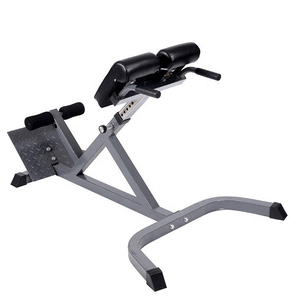
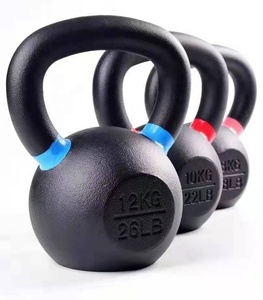
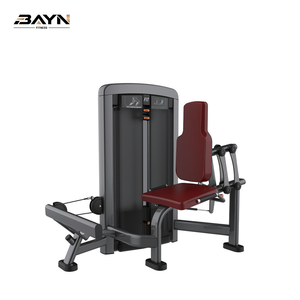
In the contemporary commercial fitness landscape, the procurement of strength and conditioning infrastructure has evolved from off-the-shelf purchases into high-level structural engineering projects. Facilities across Switzerland—ranging from high-end boutique functional training boxes in Zurich and commercial health clubs in Geneva to elite alpine performance centers in St. Moritz and military tactical facilities—demand modular gym rigs that exhibit structural rigidity, absolute safety compliance, and spatial efficiency. Satisfying these stringent requirements requires a manufacturing partner capable of delivering high-gauge steel fabrication, laser-cut sub-millimeter precision, and custom modularity at scale.
China has firmly established itself as the global epicenter for advanced commercial fitness equipment manufacturing. Combining automated robotic welding, 3D fiber laser cutting, and eco-friendly electrostatic thermosetting powder coating processes, top Chinese modular gym rig manufacturers provide an unprecedented cost-to-quality ratio. When imported into the Swiss market, these systems bridge the gap between high institutional expectations and budget sustainability. By integrating American-tier structural engineering philosophies with Chinese industrial capacity, Swiss facility operators gain access to heavy-duty power racks, wall-mounted rigs, and freestanding functional bridges tailored to localized space constraints and structural floor load dynamics.
Furthermore, procurement managers in Switzerland face unique logistical and operational hurdles. High commercial real estate costs in urban hubs demand that modular rigs serve multiple training modalities—combining Olympic weightlifting, suspension training, bodyweight gymnastics, cable resistance, and landmine attachment integration within a single structural footprint. Partnering directly with top-tier OEM manufacturers in China allows Swiss distributors and facility planners to specify exact upright dimensions (such as 75x75x3mm or 80x80x4mm structural steel profiles), Westside hole spacing, laser-cut numerical identification markers, and specialized zinc-plated corrosion resistance suitable for humid indoor pools or high-altitude outdoor installations.
The structural performance of a modular gym rig depends strictly on its base materials, manufacturing tolerance, and joint connection integrity. Premium Chinese rig manufacturers utilize high-tensile structural steel (Q235B to Q355B grades), ensuring maximum yield strength to prevent deformation under dynamic athlete shock loading.
Rigid 75mm x 75mm (3"x3") or 80mm x 80mm column uprights crafted from cold-rolled steel with wall thicknesses ranging from 3.0mm to 4.0mm. Features precision 4-way laser CNC punching for complete attachment compatibility across all grid faces.
Surface treatment includes automated shot-blasting, phosphate anti-rust washing, and dual-layer electrostatic powder coating (80-120 microns depth). Yields outstanding scratch resistance against metal-on-metal J-cup contact.
Engineered using Finite Element Analysis (FEA) software to guarantee structural stability under maximal operational stress. Fastened with Grade 8.8 industrial hardware to eliminate micro-wobble during multi-user synchronization.
A critical engineering consideration for fitness facility installations in Swiss urban zones (such as multi-story buildings in Zurich or Bern) is vibration transmission and acoustic dampening. China’s leading custom manufacturers engineer specialized modular footplates with integrated heavy-duty vulcanized rubber dampening pads, coupled with UHMW (Ultra-High Molecular Weight) plastic inserts inside all J-cups and safety spotter arms. This structural isolation suppresses high-frequency impact vibrations from heavy barbell drops, protecting building infrastructure and complying with local Swiss noise abatement standards (SIA 181).
Modular gym rigs manufactured in China are engineered for versatile adaptation. Below are the primary deployment scenarios observed across Swiss athletic, commercial, and institutional sectors:
In densely populated commercial districts where floor space commands premium rent, facility managers utilize slimline, wall-mounted fold-away rigs and multi-station cross-training bridges. China's top OEM manufacturers provide CAD floorplan integration, creating compact units that feature wall ball targets, landmines, dip stations, and integrated plate storage—maximizing floor space for group classes while retaining full Olympic lifting capabilities.
Alpine performance centers and resort-based training facilities require outdoor strength rigs exposed to extreme cold, high humidity, and snowfall. Chinese manufacturers implement hot-dip galvanization techniques combined with outdoor-grade UV-resistant fluorocarbon powder coatings. This prevents oxidation and corrosion, allowing outdoor functional rigs to withstand severe winter environments year-round.
Military and first-responder training units demand indestructible rigs capable of supporting simultaneous high-volume tactical conditioning routines. Multi-bay freestanding rigs engineered with 80x80x4mm uprights, heavy pull-up bars, rope-climbing extensions, and monkey bar bridges provide the structural integrity needed for demanding tactical operations.
Corporate headquarters in Switzerland prioritize refined aesthetics, silent operation, and brand reflection. China manufacturers utilize precision laser-cutting to incorporate custom corporate logos directly into steel headers, paired with bespoke matte finishes (RAL colors) and integrated cable storage, matching the clean minimalist interiors of modern Swiss corporate wellness facilities.
The procurement strategy of Swiss fitness operators is undergoing a shift toward sustainable longevity, digital integration, and modular expandability. Understanding these localized macro-trends allows buyers to make informed long-term investments:
Facility owners are stepping away from welded, single-purpose rigid structures. Instead, they prefer standardized bolt-together modular systems that allow quick addition of extra bays, cable pulleys, jammer arms, or storage shelves as membership grows.
In alignment with Swiss environmental mandates, buyers favor suppliers that utilize zero-VOC powder coatings, recyclable structural steel, and efficient shipping packaging to minimize overall carbon footprints.
Clutter-free training zones are paramount for user safety. Rigs configured with integrated weight plate trees, dumbbell trays, bumper plate toaster racks, and barbell sleeves are preferred to maintain clear floor pathways.
By cutting out intermediate European brand markups, Swiss fitness club chains, athletic associations, and commercial equipment distributors can reallocate capital expenditure into custom specifications and higher-grade accessories. Partnering directly with an established Chinese manufacturer provides key strategic benefits:
Modify frame height, depth, hole diameter (e.g., 21mm vs. 26mm), laser-cut logo plates, and color schemes. Complete CAD 2D/3D mockups are provided before steel cutting begins.
Gain up to 40%-60% cost savings compared to traditional European-built rigs, allowing facilities to purchase expanded attachment fleets (landmines, dip bars, GHD extensions) within the same budget.
Experienced export departments handle FOB, CIF, or DDP shipments straight to Swiss cantons, managing container packing, customs clearance documents, and EUR.1 origin documentation efficiently.
Answers to critical questions regarding standards, shipping, structural safety, and customization for Swiss procurement managers.
Leading Chinese manufacturers design and test structural rigs to comply with EN ISO 20957-1 (General Safety Requirements) and EN ISO 20957-2 (Strength Training Equipment). Steel components undergo static stress loading tests, weld inspection certifications, and coating adhesion checks. Detailed technical passports and compliance certificates are supplied for local Swiss building inspection approval.
Production cycles generally range between 20 to 30 days depending on OEM customization (such as specialized laser branding and custom RAL colors). Ocean freight to European ports (such as Rotterdam or Hamburg) followed by bonded rail or truck transport to Swiss destinations typically takes 30 to 40 days. Total turnaround from final CAD design approval to facility arrival is roughly 8 to 10 weeks.
Yes. Customization is a core advantage of direct manufacturing. Column upright heights can be shortened to 2.2 meters for basement facilities or extended up to 4.5 meters for specialized climbing rope stations. Crossmember lengths can also be modified to match exact room dimensions and column spacing.
For outdoor installations exposed to snow, rain, and UV exposure, we recommend hot-dip galvanization combined with an outdoor-grade architectural powder coat. Hot-dip galvanizing coats both the inside and outside of the steel tubing with a corrosion-resistant zinc layer, ensuring structural longevity in high-humidity or sub-zero mountain climates.
Because upright hole patterns follow standardized international grids (such as 50mm or 75mm spacing with 21mm/26mm pin holes), expanding your system is simple. Original manufacturers retain your facility’s CAD schematics in their database, allowing exact matching of additional bays, spotter arms, cable attachments, or pull-up modules years down the line.
Connect directly with our engineering team for custom 2D/3D CAD facility design, structural load consultations, and direct factory quotation tailored for the Swiss market.