
Precision-engineered heavy-duty barbell racks, plate-loaded machinery, and bumper plate systems manufactured to international commercial standards.
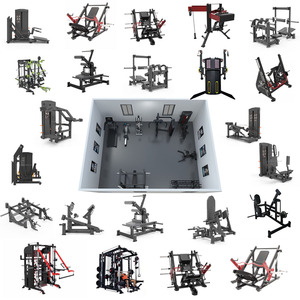
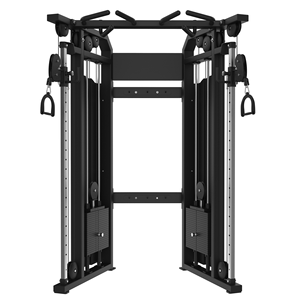
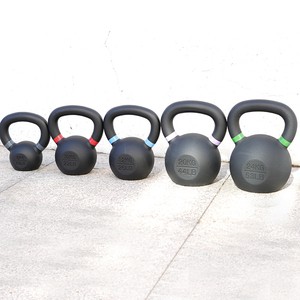
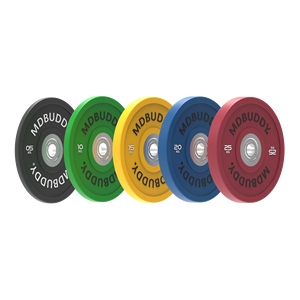
In high-traffic commercial fitness clubs, collegiate athletic centers, and tactical training facilities, free-weight storage infrastructure is a critical operational foundation. This whitepaper analyzes manufacturing benchmarks, structural metallurgy, space optimization metrics, and strategic supplier selection criteria for global buyers.
Top-tier Chinese manufacturers utilize Q235B and Q355 cold-rolled structural steel tubing (equivalent to ASTM A500 Grade B). Wall thickness standards for institutional strength racks require 11-gauge (3.0mm) to 7-gauge (4.5mm) steel to eliminate frame deflection under multi-ton dynamic static loads.
Leading OEM/ODM factories deploy 3D fiber laser tube cutters achieving tolerances under ±0.1mm, ensuring keyhole alignment for attachment pin drops. Fully automated robotic MIG welding delivers uniform fillet weld penetration, preventing stress cracking at critical high-load joints.
To withstand extreme daily abuse, elite manufacturing involves multi-stage electrostatic thermosetting powder coating with zinc-rich anti-corrosion primers. Critical contact zones are shielded with high-density Ultra-High-Molecular-Weight (UHMW) polyethylene guards to prevent metal-to-metal barbell knurling degradation.
A quantitative engineering comparison framework for athletic directors, facility managers, and equipment importers.
| Engineering Parameter | Light Commercial Grade | Heavy Commercial (Standard OEM) | Institutional Grade (Power Lift / Top Tier) |
|---|---|---|---|
| Tubing Specification | 2" x 2" (14-Gauge / 2.0mm) | 3" x 3" (11-Gauge / 3.0mm) | 3" x 3" to 3" x 4" (7-to-11 Gauge Structural Steel) |
| Welding Process | Manual Spot / TIG Welding | Semi-Automated MIG Welding | 360° Continuous Robotic Fillet Welding |
| Barbell Contact Protection | Standard Rubber / Bare Steel | Standard PVC Inserts | Replaceable High-Density UHMW Molded Inserts |
| Coat Thickness & Test | Single Coat (~60-80 μm) | Double Coat (~100-120 μm) | Zinc Primer + Dual Electrostatic Powder (200h Salt Spray Passed) |
| Dynamic Load Rating | 600 LBS (270 KG) | 1,200 LBS (540 KG) | 2,500+ LBS (1,130+ KG) Certified Structural Capacity |
| Hardware & Fasteners | Grade 4.8 Standard Zinc Bolts | Grade 8.8 High-Tensile Bolts | Grade 10.9 Heavy-Duty Structural Hardware w/ Lock Nuts |
Choosing the right geometry for barbell storage directly impacts facility throughput, athlete safety, and floor space return on investment (ROI).
Vertical gun-style racks utilize wall-mounted laser-cut steel plates or free-standing floor bases to store barbells upright. Designed with lined cutouts to hold Olympic bars vertically, this design minimizes floor footprint to less than 4 sq. ft for up to 10 Olympic bars.
Horizontal storage racks position bars parallel to the ground or utilize roll-away carts with integrated bumper plate slots ("toast racks"). These modular systems allow strength coaches to wheel weighted equipment directly to training stations.
Directly mounted onto 3x3 power racks or half racks, integrated storage pegs utilize unused vertical upright space. This eliminates the need for separate floor racks, keeping plates and specialty bars immediately accessible to the lifting station.
As global fitness facility operators focus on operational efficiency and longevity, major China manufacturers are shifting from simple OEM casting to high-value engineering solutions. Key market drivers include:
Transitioning from traditional virgin rubber to odorless CPU (Cast Polyurethane) and recycled eco-friendly compounds that resist cracking, UV degradation, and oil absorption over 10+ years of institutional use.
Standardizing around 3" x 3" frame profiles with 1-inch or 5/8-inch laser-cut pin holes. This allows strength facilities to interchange attachments, barbell storage pegs, landmines, and dip handles across brands.
Advanced 3D CNC laser engraving and custom powder coat matching allow schools, tactical units, and franchise gym chains to incorporate high-grade stainless steel logo plates and multi-color frame finishes direct from the factory floor.
Building an elite strength center requires a structured, multi-step planning framework to balance equipment density, safety clearance, and athlete flow.
We analyze peak usage volume, athlete counts, training methodologies, and structural floor weight-bearing limits. Safety clearance zones around power racks and barbell storage stations are mapped to prevent traffic bottlenecks.
Utilizing advanced 3D modeling software, our engineering team renders complete room visualization, placing power racks, selectorized machines, platforms, and storage trees to optimize every square foot of facility real estate.
Equipment is fabricated under strict ISO9001 guidelines, robotic welded, laser-cut, and custom powder-coated. Direct container loading and protective palletizing guarantee pristine arrival for professional on-site installation.
Expert answers to common engineering, logistical, and customization questions when sourcing barbell storage racks and strength equipment from China manufacturers.
For institutional and heavy-duty commercial applications, a minimum of 11-gauge (3.0mm nominal wall thickness) structural steel tubing with 3" x 3" (75mm x 75mm) or 2" x 3" upright profiles is strongly recommended. Light commercial equipment using 14-gauge (2.0mm) steel is prone to frame deformation when subjected to heavy multi-bar storage (over 1,000 lbs cumulative load).
Top-tier manufacturers incorporate replaceable UHMW (Ultra-High-Molecular-Weight) polyethylene inserts into all bar contact slots, gun rack teeth, and vertical sleeve tubes. UHMW plastic possesses superior impact resistance and low friction, preventing steel-on-steel contact that strips zinc/chrome plating and dulls sharp barbell knurling.
Export-grade fitness equipment undergoes a thorough multi-stage pretreatment process including shot blasting to surface cleanliness Sa2.5, chemical degreasing, zinc-phosphate conversion coating, and dual-layer electrostatic thermosetting powder coating. Quality-focused factories test coatings under ASTM B117 salt spray standards for over 200–500 hours without red rust formation.
Yes. OEM/ODM contract manufacturing allows complete brand customization. Facilities can specify RAL color codes for powder coat frame finishes, request custom upholstery stitching, and add 3D CNC laser-cut stainless steel logo plates or laser-cut upright branding for team and institutional identity matching.
Standard production lead times for customized commercial equipment ranges from 25 to 40 days. Racks and storage systems are engineered in flat-pack knocked-down (KD) modular structures, maximizing CBM (cubic meter) utilization inside 40ft HQ containers and significantly lowering ocean freight cost per unit.
Buyers should request ISO9001 quality management system certification, EN957 European stationary training equipment safety compliance reports, factory audit documentation (such as SGS or TÜV Rheinland third-party audits), raw material mill test certificates (MTC), and video verification of automated laser cutting and robotic welding lines.
Eliminate intermediary markup by working directly with state-of-the-art manufacturing facilities equipped with automated laser tube cutters, CNC bending machines, and robotic welding cells.
Every frame design undergoes finite element analysis (FEA) computer simulation followed by real-world static and dynamic overload testing up to 2.5x rated working capacity.
From initial 2D spatial layout and custom CAD renderings to protective export packaging and customs documentation, our dedicated team supports your procurement cycle end-to-end.
Consult with our structural equipment specialists to get custom CAD room designs, detailed technical specifications, and competitive B2B factory-direct quotations.