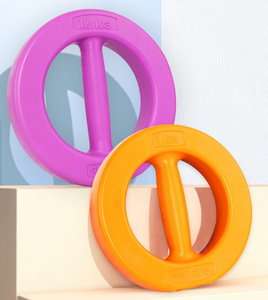
In the rapidly evolving global commercial fitness ecosystem, the procurement of free-weight strength equipment has shifted from standard commoditized cast iron to precision-engineered machined steel and cast steel kettlebell sets. Commercial strength and conditioning facilities, collegiate athletic performance centers, tactical military centers, and high-volume fitness franchises require equipment with unyielding structural integrity, micro-level weight precision, and exceptional coating durability. This industry whitepaper analyzes the top manufacturing methodologies, global supply chain benchmarks, structural metallurgy, and procurement strategies for sourcing commercial-grade steel kettlebells direct from premier OEM factories.
Direct factory product offerings manufactured under strict TQM (Total Quality Management) protocols, engineered for commercial gyms, institutional weight rooms, and wholesale distribution.
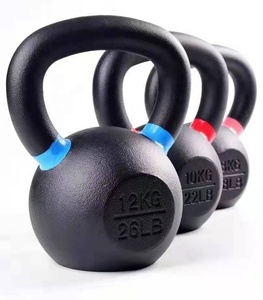
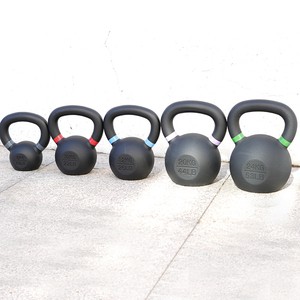
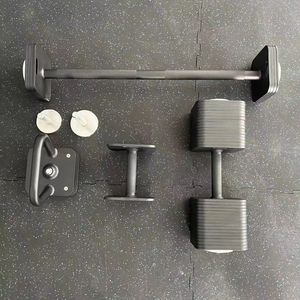
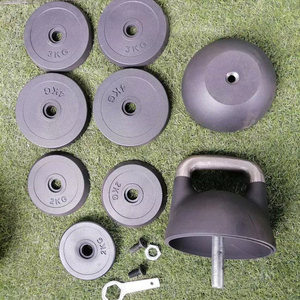
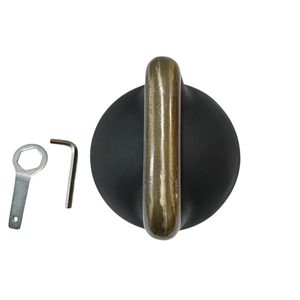
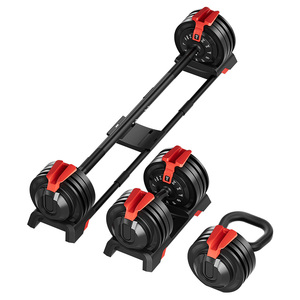
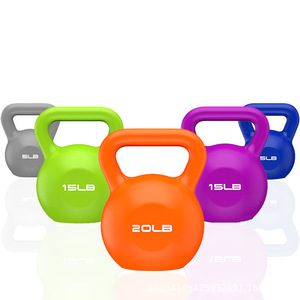
From a structural engineering perspective, the choice of raw material directly impacts the lifespan, safety profile, and weight-to-volume ratio of free weights in institutional settings. Standard cast iron kettlebells are produced using gray iron (ASTM A48 Class 20/30), which possesses high compressive strength but relatively low tensile strength and brittle failure characteristics under high-velocity drop impacts.
Conversely, cast steel (ASTM A27 / Carbon Steel Grade 65-35) and machined solid steel kettlebells offer superior ductility, fracture toughness, and fatigue resistance. Steel kettlebells maintain a uniform outer shell geometry regardless of weight—a fundamental requirement for Girevoy Sport and competitive kettlebell lifting (IKSFA, WKSF).
Engineering Gain: Cast steel kettlebells exhibit a tensile strength exceeding 540 MPa and yield strength of 290 MPa, eliminating handle snapping or structural fracture risks even during high-impact ballistic drops on rubberized flooring.
| Material Specification | Gray Cast Iron (ASTM A48) | Ductile Iron (QT450-10) | Cast Steel / Machined Steel |
|---|---|---|---|
| Tensile Strength (MPa) | 150 - 200 MPa | 400 - 450 MPa | 540 - 650 MPa |
| Impact Resistance (Joules) | Low (Brittle snap hazard) | Moderate | High (Extremely Ductile) |
| Weight Calibration Variance | ± 3.0% to 5.0% | ± 1.5% to 2.0% | ± 0.5% (±50 grams) |
| Dimensional Standardization | Varies by unit weight | Varies by unit weight | Fixed Competition Shell Dimensions |
| Coating Adhesion (ASTM D3359) | Class 3B (Porosity risks) | Class 4B | Class 5B (Electrostatic Electro-coat) |
Leading OEMs and factories utilize specialized casting, machining, and surface finishing workflows to meet international commercial standards. The structural longevity of a steel kettlebell relies on three core manufacturing phases:
Unlike cheaper multi-piece welded handle variants that create stress concentrations along the horn-to-bell junction, modern factories employ unibody gravity casting or investment casting. This guarantees zero internal voids, balanced mass distribution, and eliminated structural failure points.
Handles are turned on multi-axis CNC lathes to achieve exact 33mm (or 35mm custom) diameters with uniform curvature. The bottom bases are precision-milled perfectly flat to eliminate rocking or instability when stored on dumbbell racks or floor platforms.
Surface treatments must withstand chalk application, sweat exposure, and high-frequency friction. State-of-the-art suppliers utilize shot-blasting (Sa 2.5 standard) followed by zinc-phosphate electro-coating and matte thermosetting powder topcoats for optimal grip and anti-corrosion protection.
When athletic procurement managers, commercial facility planners, and global fitness brands evaluate manufacturing partners, product specs are only one piece of the puzzle. Factory capabilities, customization depth, and turnkey facility planning govern long-term ROI.
By bypassing broker intermediaries, procurement teams interface directly with metallurgical engineers, tooling designers, and quality assurance inspectors. Raw materials are audited via spectral analysis to guarantee exact steel chemistry.
OEM solutions allow laser-etched logo plates, custom embossed weight indicators (in both KG and LB), custom powder coat colors matching university or facility brand identities, and international kettlebell federation color-coded rings.
Leading manufacturers provide complete equipment ecosystem design—ensuring steel kettlebell sets fit seamlessly into multi-tier storage racks, functional movement stations, and integrated platform weight rooms.
As global fitness equipment supply chains evolve toward sustainability, smart technology, and modular agility, enterprise buyers must align with factories investing in next-generation manufacturing processes:
Space-constrained facilities and tactical field deployments are increasingly adopting internal plate-loaded steel competition kettlebells. Featuring double-locking central mechanisms and precision-machined internal steel discs, these units allow rapid weight adjustments from 8kg to 32kg within a single standardized outer shell.
Environmental compliance and ESG metrics are driving top suppliers to utilize 100% electric arc furnace (EAF) recycled scrap steel. EAF production reduces carbon emissions by over 60% compared to traditional blast furnace pig iron production.
To prevent powder coating chipping under extreme chalk and cleaning chemical usage, elite competition series kettlebells now feature raw, micro-shot-peened bare steel handles with e-coated body shells—delivering optimal chalk adhesion without rust accumulation.
Key considerations for athletic directors, commercial equipment distributors, and institutional buyers prior to finalizing factory supply contracts.
Cast steel has significantly higher tensile and impact strength (540+ MPa vs. ~200 MPa for gray iron). Steel kettlebells will not crack or snap at the handle when dropped on hard rubber flooring. Additionally, steel competition kettlebells maintain uniform outer dimensions across all weight increments (from 8kg to 48kg), enabling consistent movement mechanics for athletes.
High-tier factories utilize automated CNC hollow-coring and precision internal steel shot weight filling, or 100% solid steel mold casting. Each unit undergoes digital load cell calibration before surface coating to guarantee a tight weight tolerance within ±0.5% (±50 grams) of target mass.
Yes. Factory direct OEM/ODM partnerships accommodate custom RAL color powder coatings, international federation ring color schemes, embossed kilometric mass stamps, and laser-machined stainless steel logo inserts welded directly flush into the bell body.
E-coating (Electrophoretic Deposition) and premium thermosetting matte powder coating over a shot-blasted phosphatized steel substrate offer superior corrosion resistance. E-coating creates an ultra-thin, highly resilient chemical bond that resists rust even when exposed to heavy moisture, sweat, and abrasive cleaning solutions.
Standard wholesale MOQ for custom OEM production runs typically starts at 1 to 3 metric tons (equivalent to roughly 100–150 mixed kettlebell sets). For catalog standard products with stock availability, orders can be consolidated in container load (FCL) or less-than-container load (LCL) shipments based on procurement needs.
Units are individually wrapped in heavy-duty polyethylene bags, encrusted in high-density custom molded EPE foam shells, packaged in 5-ply corrugated master cartons, and strapped onto reinforced ISPM-15 compliant fumigated wooden pallets with plastic stretch wrap protection.