1. Commercial Squat Rack Industry Benchmark: Engineering & Production Standards
In the modern commercial strength and conditioning sector, the selection of institutional equipment requires rigorous scrutiny of manufacturing parameters, structural integrity, and ergonomic adaptability. As premier Custom OEM Commercial Squat Rack Factories and Exporters, our manufacturing paradigm centers on high-volume, automated precision engineering designed to fulfill the extreme operational demands of collegiate athletics, professional sports franchises, commercial health clubs, and tactical training centers.
A heavy-duty squat rack is the functional epicenter of any institutional weight room. To ensure total occupant safety and equipment longevity under continuous high-load cycles, institutional buyers must evaluate key engineering metrics including steel gauge thickness, upright column profile dimensions, hole spacing pitch, weld penetration depths, and protective finishing technologies.
Procurement Benchmark: 11-Gauge (3.0mm) vs. 12/14-Gauge Steel
Light commercial racks frequently utilize 12-gauge (2.5mm) or 14-gauge (2.0mm) steel tubing, which risks structural flexing and fatigue under dynamic drop impacts exceeding 800 lbs. True institutional power racks require structural Q235B/Q355 cold-rolled 11-gauge steel with 3" x 3" (75mm x 75mm) upright profiles, capable of sustaining static loads over 2,500 lbs and dynamic impact load capacities exceeding 1,500 lbs.
Robotic Fiber Laser Cutting
Precision 3D fiber laser cutting guarantees strict hole alignment tolerance (±0.05mm) along four upright sides. Laser-etched numerical hole markers prevent offset accessory placement and streamline athlete transition times during high-density team workouts.
Automated Robotic MIG Welding
Full-penetration continuous seam welds executed by Japanese Fanuc multi-axis robotic welders eliminate structural stress joints. Gusseted base plates and double-flanged connecting crossmembers provide structural rigidity without lateral frame sway.
Thermosetting Electrostatic Finish
Dual-stage surface pretreatment including automated shot blasting and zinc-phosphate anti-corrosion coating, followed by electrostatically applied thermosetting powder coat (80–120 µm thickness) for high resistance against chipping, sweat oxidation, and impact wear.
As commercial fitness facilities evolve into multi-disciplinary performance hubs, global procurement heads and equipment distributors are shifting away from rigid, single-purpose weight cages toward Modular Power Rack Ecosystems. Understanding these emerging technological shifts is essential for B2B buyers seeking to future-proof their capital investments.
Key Global Sourcing Trends Transforming Commercial Strength Equipment Manufacturing:
Integrated Functional Cable Columns: Transitioning from standalone cable machines to rack-integrated dual pulley systems with selectorized pin-select stack weights or plate-loaded carriages, saving up to 40% floor space.
Laser-Cut Branding & Custom Customization: Institutional buyers are demanding high-level OEM customization, including custom laser-cut logo plates, precision color-matched powder coatings (RAL system), and custom upholstered pad embossing.
UHMW Protective Interface Integration: Standardizing Ultra-High-Molecular-Weight (UHMW) polyethylene lining across all J-cups, spotter arms, and upright contact points to eliminate steel-on-steel friction, noise pollution, and barbell knurling degradation.
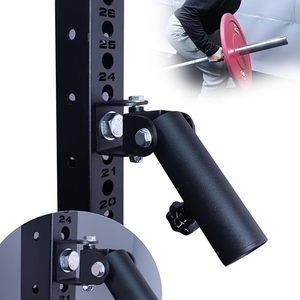
Quick-Release Modular Attachments: High demand for versatile rack attachments including Jammer Arms, Landmine inserts, Dip handles, Monolift attachments, and Band Peg matrices that lock in seamlessly via 5/8" or 1" pin hardware.
Integrated Platform Inlays: Transitioning to flush-mount oak wood and rubber weightlifting platforms built directly into the power rack base footprint, preventing tripping hazards and optimizing floor topology.
3. Enterprise OEM/ODM Manufacturing Advantages & Global Logistics
Navigating the global strength equipment supply chain requires a factory partner capable of delivering consistent quality control, scalable production volume, and seamless international export compliance. Our manufacturing facility combines decades of metallurgical experience with modern lean manufacturing principles.
End-to-End OEM/ODM Customization
From preliminary 2D drafting and 3D SolidWorks CAD modeling to structural stress analysis (FEA) and rapid prototyping, we assist brand owners and distributors in bringing proprietary rack designs to mass market production efficiently.
Strict ISO9001 Quality Assurance
Every batch of raw steel undergoes tensile testing, chemical composition analysis, and salt-spray corrosion chamber testing (ASTM B117). Rigorous quality checkpoints inspect dimensions, weld integrity, powder coat mil thickness, and packaging security.
4. B2B Procurement FAQ: Everything Buyers Need to Know
Q1: What is the minimum order quantity (MOQ) for custom OEM squat rack manufacturing?
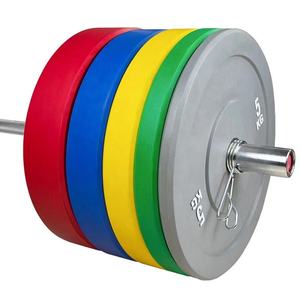
Our standard production MOQ for custom OEM commercial squat racks is typically 20 units per rack model. For full facility planning orders or mixed container shipments (FCL), we offer flexible MOQs across multiple product lines including benches, storage racks, bumper plates, and barbells.
Q2: Can we customize frame color, upright hole numbers, and brand logo plates?
Yes, absolute customization is our core strength. We offer custom powder-coat finishing matching any RAL color code, custom laser-cut logo nameplates (stainless steel or powder-coated steel), customized laser-etched upright numbering, and custom color upholstery on integrated bench stations.
Q3: What safety standards and structural load certifications do your squat racks meet?
Our commercial power racks are engineered in compliance with international commercial strength equipment standards, including ISO 20957-1 and EN 957-2 Class S (Studio/Commercial Use). Static finite element analysis (FEA) and dynamic stress testing verify dynamic load capacities exceeding 1,500 lbs (680 kg).
Q4: What is the typical lead time for custom production and export shipment?
Standard OEM production lead time is 30 to 45 days following CAD drawing approval and deposit receipt. Prototype development for brand-new custom engineering takes 15 to 20 days. Transit times vary by destination port (e.g., 18-25 days to US West Coast, 28-35 days to European main ports).
Q5: How do you protect hardware against rust, sweat, and finish scratching?
We utilize a dual-layer surface treatment: magnetic automated shot blasting removes surface impurities, followed by a anti-rust zinc phosphate wash, electrocoated primer, and a final heavy thermosetting powder coat. Furthermore, all accessory contact points utilize UHMW plastic inserts to prevent bare metal scratching.
Partner with a Premier OEM Commercial Squat Rack Exporter
Elevate your equipment catalog or complete your institutional facility procurement with factory-direct heavy-duty strength equipment. Access complete specifications, CAD drawings, and wholesale pricing.