
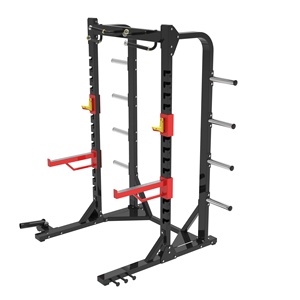
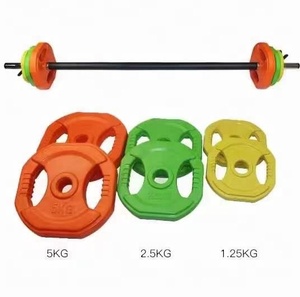
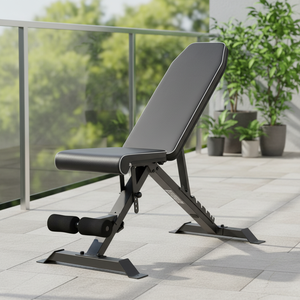
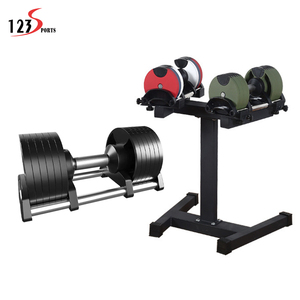
In the contemporary B2B strength and conditioning landscape, the commercial squat rack is no longer viewed merely as a static cage for barbell squats and bench presses. It has morphed into the central nerve center of high-performance weight rooms, tactical fitness facilities, commercial health clubs, and collegiate athletic centers. As global demand shifts toward space-optimized, highly versatile modular training rigs, China has emerged as the global epicenter for precision power rack attachment manufacturing and OEM engineering.
Modern procurement directors, fitness equipment distributors, and institutional gym planners face a complex sourcing landscape. Achieving structural durability, safety compliance, aesthetic perfection, and seamless component interoperability requires deep insights into metallurgical selection, automated robotic welding techniques, structural load testing, and custom branding integrations.
Strategic Sourcing Insight: Premium power rack manufacturing in China has transitioned from low-cost mass production to institutional-grade precision engineering. Modern manufacturing plants utilize 3D fiber laser tube cutting, multi-axis CNC machining, and automated robotic welding to satisfy international standards such as ISO9001, EN957, and ASTM F2276.
The structural backbone of any high-capacity power rack system is defined by its steel gauge and tensile strength. Premium Chinese manufacturers default to heavy-duty Q235B and Q345 industrial steel tubing, equivalent to ASTM A500 Grade B in North America. For institutional environments where racks endure multi-ton static loads and continuous dynamic impacts, 3" x 3" (75mm x 75mm) structural uprights manufactured from 11-gauge (3.0mm nominal wall thickness) steel represent the non-negotiable global gold standard.
Key metallurgical properties governing export-grade attachments include:
Commercial gym operators and international equipment brands are demanding unprecedented versatility without expanding total floor footprint. The global market for power rack attachments is undergoing rapid technological and ergonomic transformations. Suppliers who align with these macro-trends provide competitive advantages to global buyers.
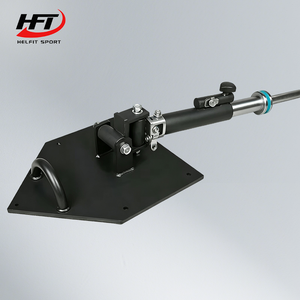
Jammer arms and ISO-lateral lever attachments are advancing from single-axis linear hinges to multi-plane universal joint systems. This allows athletes to perform explosive athletic pushing, pulling, and rotational movements directly on the rack footprint.
Traditional screw-knobs and cotter pins are being rapidly replaced by high-density magnetic locking mechanisms and spring-loaded pop-pins with UHMW internal liners. This drastically reduces facility setup times between athlete rotations.
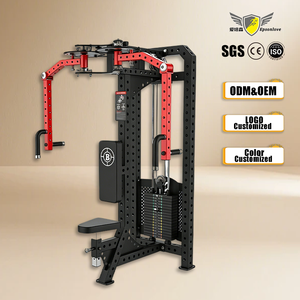
The integration of selectorized weight stacks (200lb–300lb dual stacks) and dynamic pin-selected cable pulleys directly into standard 4-post and 6-post power racks has rendered stand-alone functional trainers obsolete in space-constrained facilities.
Institutional facilities strictly require full-coverage Ultra-High Molecular Weight (UHMW) polyethylene thermoplastic linings on J-cups, spotter arms, and dip attachments to eliminate knurling wear and dampen acoustic output in residential or commercial settings.
B2B procurement teams prioritize OEM custom branding. Modern factories provide CNC laser-cut stainless steel logo plates, custom powder-coat color matching (RAL codes), and branded platform rubber inlays to foster strong institutional identity.
Rack-attachable Glute Ham Developers (GHD), reverse hyper extensions, and belt squat attachments are becoming baseline procurement demands, offering multi-exercise functionality without taking up added floor square-footage.
When sourcing power rack attachments and strength frames from Chinese manufacturing partners, procurement managers must establish stringent technical criteria to separate standard commercial consumer goods from heavy-duty institutional equipment.
| Engineering Parameter | Standard Commercial Grade | Institutional Export Standard (Top Tier) | Audit & Testing Methodology |
|---|---|---|---|
| Steel Tube Dimensions | 50x50mm or 60x60mm (2"x2" / 2.35"x2.35") | 75x75mm (3" x 3") or 90x90mm | Digital Caliper & Ultrasonic Wall Gauge |
| Wall Thickness (Gauge) | 2.0mm - 2.5mm (14 to 12 Gauge) | 3.0mm - 4.0mm (11 to 8 Gauge) | Physical Cross-Section Spectrometry |
| Hardware & Pin Diameter | 12mm - 16mm (1/2 Inch) | 16mm - 26mm (5/8 Inch to 1 Inch) | Shear Force Stress Testing |
| Welding Standard | Manual MIG Spot Welding | 360° Continuous Robotic TIG / MAG | Non-Destructive Ultrasonic Weld Inspection |
| Surface Protection | Single-Layer Dry Powder Coat | Dual-Layer E-Coat + Thermosetting Powder | 500-Hour ASTM B117 Salt Spray Chamber |
| Barbell Protection | Basic Rubber Pads or Bare Metal | High-Density CNC Molded UHMW Liners | Durometer Hardness & Impact Wear Test |
| Static Weight Capacity | 300kg - 450kg (660lbs - 1000lbs) | 680kg - 1100kg (1500lbs - 2500lbs+) | Hydraulic Static Load Destruction Rig |
As a leading Chinese manufacturer and exporter of commercial power racks and rig attachments, our manufacturing architecture is structured to support high-volume OEM/ODM projects, private label brand launches, and large-scale government/institutional fitness tenders.
We work directly with athletic directors, strength coaches, and facility architects to convert space dimensions into optimized 2D CAD floorplans and high-resolution 3D BIM visual renderings. We calculate traffic flow, barbell clearance zones, and station density before raw materials are cut.
Establish market distinction through custom frame finishes (matte black, textured metallic, high-gloss primary colors) via computer-controlled RAL powder coating systems. Elevate your equipment lines with laser-cut branded logos, custom upholstery embroidery, and branded rubber platforms.
Every newly designed rack attachment—whether a heavy-duty Monolift, Adjustable Spotter Arm, or Dip Station—undergoes finite element analysis (FEA) software simulation followed by physical hydraulic load testing to verify maximum load ratings prior to mass assembly.
Navigating global ocean freight requires precision packaging engineering. Our drop-tested, high-density wood palletizing and flat-pack carton layouts maximize 40ft HQ container loading capacity, minimizing shipping damage and reducing per-unit landed freight costs.
Answers to common questions from commercial gym equipment importers, distributors, brand owners, and procurement leads regarding power rack attachments sourcing from China.
Engineered for strength. Built for longevity. Tailored to your brand specifications. Contact our engineering and commercial sales team today to request product catalogs, technical drawings, or direct FOB/CIF wholesale pricing.
Get a Quote