
CE Certified Preacher Curl Bench Factories & Suppliers

Institutional-Grade Biomechanical Engineering, Structural Compliance, and Global B2B Procurement Benchmarks for Commercial Fitness Facilities

Direct Factory Catalog

Featured Commercial Strength Equipment

Explore heavy-duty strength equipment engineered for high-volume commercial weight rooms, collegiate performance centers, and tactical training environments.

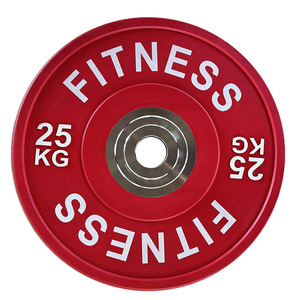
RUIBO 20kg Steel Ring Competition Weightlifting Rubber Bumper Plates

RUIBO 20kg Steel Ring Competition Weightlifting Rubber Bumper Plates Colorful Durable Universal Training Weight Plate

Get Catalog
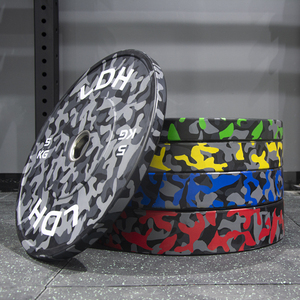
Factory Wholesale IWF Rubber Weight Plate Fleck Discs

Factory Wholesale IWF Rubber Weight Plate Fleck Discs Camo Color 25kg 50kg 15kg Fitness Equipment Weightlifting Bumper Plates

Get Catalog
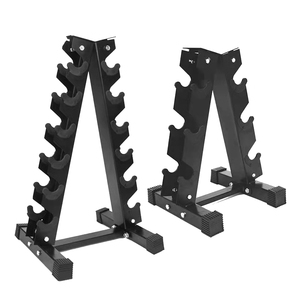
China EIGFOH 70039-3-3 3-Pair Steel Non-Foldable Dumbbell Rack

China EIGFOH 70039-3-3 3-Pair Steel Non-Foldable Dumbbell Rack Modern Floor-Standing Anti-Slip Base Home Gym Storage

Get Catalog
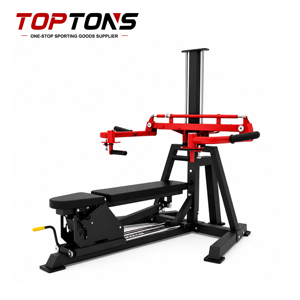
TOPTONS Plate Loaded Dual Function Chest & Shoulder Press Machine

TOPTONS Plate Loaded Dual Function Chest & Shoulder Press Machine, 2-in-1 Bench & Shoulder Press Trainer for Commercial Gym

Get Catalog
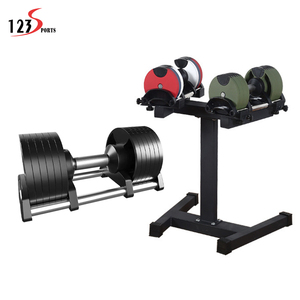
Wholesale Free Weight Round Workout 32Kg Adjustable Dumbbells

Wholesale Free Weight Round Workout 32Kg(2Kg+) Increase Adjustable Dumbbells Gym Adjustable Dumbbells Set

Get Catalog
Wholesale 90lb Adjustable Steel Dumbbells Custom Fitness Gym Sets

Wholesale 90lb Adjustable Steel Dumbbells Custom Fitness Gym Sets with 90lb Free Weights System Cheap Adjustable Dumbbell

Get Catalog
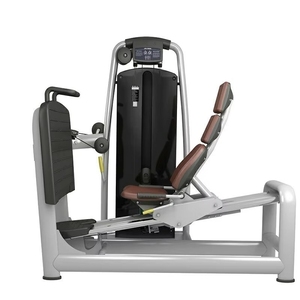
ST-9017 Commercial Gym Machines Horizontal Leg Press Gym Seated Calf Raise Machine

ST-9017 Commercial Gym Machines Horizontal Leg Press Gym Seated Calf Raise Machine

Get Catalog
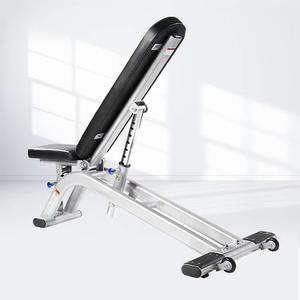
Commercial Adjustable Weight Bench Heavy Duty 1000lbs Capacity

Commercial Adjustable Weight Bench Heavy Duty 1000lbs Capacity for Gym Studio Fitness Center Strength Training Equipment

Get Catalog
EN 20957-1
CE Standard Compliance
11-Gauge
3" x 3" Structural Steel
1,000+ LBS
Verified Static Load Capacity
100%
Robotic Welding Inspection
B2B Sourcing White Paper

Engineering & Sourcing Standards for CE Certified Preacher Curl Benches

When procurement officers, athletic directors, and commercial gym franchise owners source free-weight equipment, the Preacher Curl Bench stands out as a critical station requiring meticulous biomechanical alignment and exceptional structural integrity. Designed specifically to isolate the bicep brachialis and biceps brachii muscles by fixing the upper arm in flexed positioning, this bench subjects both frame and padding to intense cyclic mechanical stress and concentrated dynamic loads.

Working with specialized CE certified preacher curl bench factories and suppliers ensures that every unit introduced into high-traffic facilities fulfills rigorous European Union safety directives—specifically EN ISO 20957-1:2013 (Stationary training equipment — General safety requirements and test methods) and EN 957-2 (Strength training equipment safety). This comprehensive procurement guide outlines structural requirements, manufacturing processes, biomechanical parameters, and market evolution trends to empower commercial buyers with actionable industry insights.

Key Procurement Takeaway: Non-compliant strength equipment poses severe liability risks in commercial environments. CE Certification guarantees that a preacher curl bench has underwent rigorous testing for frame fatigue, tip-over stability, pinch-point elimination, and maximum static/dynamic load tolerances under continuous multi-athlete daily operation.

1. Biomechanical Precision & Ergonomic Alignment

The primary performance objective of a commercial preacher curl bench is complete arm stabilization to eliminate momentum during flexion. Leading OEM/ODM manufacturers engineer pad angles precisely within the range of 45 to 60 degrees. A pad slope flatter than 45° increases shearing stress across the distal biceps tendon at full extension, whereas a slope steeper than 60° diminishes tension at the peak contraction phase.

Furthermore, premier factory designs incorporate contoured chest cushioning and multi-position seat adjustments using commercial-grade pop-pins. This allows users of diverse anthropometric proportions to align the axis of rotation of their elbows perfectly with the pad edge, mitigating hyperextension risks and optimizing muscular hypertrophy.

2. Metallurgical Standards & Structural Frame Architecture

Institutional durability depends entirely on the raw steel tubing used in fabrication. Premier manufacturers utilize heavy-gauge 11-gauge (3.0mm nominal wall thickness) S235 or S355 structural steel tubing, configured in 3" x 3" (75mm x 75mm) or 2" x 4" (50mm x 100mm) profiles. Lower-tier residential alternatives often deploy 14-gauge or 16-gauge steel, which suffers from frame flex, fatigue cracking at weld joints, and catastrophic failure under heavy overload conditions.

Specification Parameter Commercial Grade (CE Certified Factory) Light Commercial Standard Residential Grade (Non-Certified)
Steel Wall Thickness 11-Gauge (3.0 mm structural steel) 12-Gauge to 14-Gauge (2.0 – 2.5 mm) 16-Gauge (≤ 1.5 mm)
Frame Tubing Dimensions 3" x 3" (75 x 75 mm) / 2" x 4" (50 x 100 mm) 2" x 3" (50 x 75 mm) 2" x 2" (50 x 50 mm)
Tested Static Load Rating 1,000 lbs – 1,500 lbs (454 – 680 kg) 600 lbs – 800 lbs (272 – 362 kg) 300 lbs – 400 lbs (136 – 181 kg)
Pad Core Material Ultra-dense molded Polyurethane (PU) foam High-density layered EVA foam Low-cost bonded chip foam
Upholstery Fabric Commercial anti-microbial marine vinyl Standard PVC synthetic leather Basic thin vinyl covering
Bar Catch Protection Molded High-Density Polyethylene (HDPE) guards Basic rubber inserts Painted steel contact (scratches easily)
Surface Finishing Dual-layer electrostatic powder coat (Thermoset) Single-coat powder painting Standard liquid spray paint

3. Bar Catcher Engineering & Wear Prevention

Commercial preacher benches receive thousands of impacts daily as heavy EZ-curl bars and barbells are re-racked. Superior OEM suppliers equip bar catch cradles with replaceable, heavy-duty High-Density Polyethylene (HDPE) or Ultra-High-Molecular-Weight Polyethylene (UHMW-PE) wear guards. These specialized liners shield the structural steel frame from metal-on-metal contact, preserving aesthetic finish, preventing rust initiation, and dampening noise levels inside high-volume facility zones.

4. Upholstery Integrity and Foam Density Specifications

Padding deterioration is the most frequent maintenance headache for gym owners. Qualified CE certified factories utilize injection-molded polyurethane cold foam padding with a density rating exceeding 110 kg/m³. This closed-cell foam construction retains its original shape over hundreds of thousands of compression cycles without flattening out. Upholstery is crafted from marine-grade, sweat-resistant vinyl featuring double-stitched reinforced seams treated with anti-bacterial and anti-fungal coatings.

Factory Capabilities

Why Institutional Buyers Choose Direct Factory Partners

Evaluating tier-one strength equipment manufacturers requires looking beyond surface aesthetics. Here are the core competitive advantages delivered by verified industrial facilities.

Robotic Welding Precision

Automated multi-axis robotic TIG/MIG welding arms ensure consistent weld penetration and smooth aesthetic seams across all frame junctions, completely eliminating human margin-of-error in structural integrity.

Custom OEM / ODM Branding

From custom frame powder-coat colors (RAL matching) to laser-cut stainless steel logo plates and custom color-stitched upholstery, factories offer full institutional customization for facility branding.

Certified Safety Compliance

All production lots undergo formal CE mark verification, static proof loading, fatigue cycle testing (over 100,000 continuous reps), and chemical safety testing for phthalate-free upholstery compliance.

Electrostatic Powder Coating

A multi-stage chemical wash process followed by thermosetting powder application and high-temperature curing creates an ultra-durable shell resistant to sweat corrosion, chipping, and scratch damage.

Modular & Compact Ergonomics

Engineered footprint optimization maximizes room floor capacity while providing built-in transport wheels and front ground-anchoring flanges for total stability during heavy lifting sessions.

Optimized B2B Logistics

Units are engineered for flat-pack container optimization with custom high-density foam wrapping and wooden crating, reducing freight costs and preventing transport transit abrasion.

Industry Outlook

Future Sourcing & Development Trends (2025–2030)

As the global commercial fitness industry matures, B2B procurement trends for strength machinery are undergoing a structural shift toward smart integration, bio-mechanic refinements, and sustainable manufacturing practices. Importers and commercial brand owners must align with factories capable of adapting to these emerging technology drivers:

1. Smart Velocity Loss Sensing & Digital Integration

Modern collegiate sports science programs and elite athletic facilities increasingly rely on Velocity-Based Training (VBT) metrics. Advanced preacher curl bench designs are now incorporating integrated linear position transducer (LPT) mounting ports and Bluetooth weight sensors directly within the frame catching hooks. This allows real-time tracking of repetition speed, concentric power output, and fatigue thresholds without cluttering the training area with external wires.

2. Bi-Axial Dynamic Arm Pad Adjustability

Traditional preacher benches feature fixed-angle pads. Next-generation factory models are introducing multi-angle tilt mechanisms (range 30° to 65°) paired with adjustable shoulder-width cradles. This bi-axial customization accommodates diverse shoulder girdle widths, enabling targeted isolation of either the long head or short head of the biceps muscle while protecting the glenohumeral joint.

3. Eco-Friendly & Zero-VOC Manufacturing Protocols

Environmental, Social, and Governance (ESG) criteria are rapidly impacting global equipment bids. Leading certified factories are transitioning away from traditional solvent-based painting processes to 100% recyclable, zero-VOC powder coatings and chrome-free anti-corrosion pretreatments. Additionally, upholstery foam cores are increasingly utilizing bio-based polyols derived from renewable plant oils without sacrificing density or elastic longevity.

4. Multi-Function Hybrid Station Convergence

With gym operators seeking maximum spatial efficiency, factories are designing modular preacher benches that convert into spider curl benches, seated triceps extension stations, or cable-attachment hubs. Quick-release pop-pins allow seamless swapping of arm pads for specialized attachment modules, reducing spatial footprints by up to 35% in small-format fitness studios.

Procurement Guidance

Frequently Asked Questions by Institutional Buyers

Expert responses to critical compliance, structural specification, and factory sourcing questions for commercial equipment importers.

What specific testing protocols are required for CE Certification under EN ISO 20957-1?

CE certification according to EN ISO 20957-1 mandates comprehensive dynamic and static strength testing. The preacher curl bench must sustain a static load equivalent to at least 2.5 times its advertised maximum weight rating without permanent frame deformation. Furthermore, dynamic fatigue testing requires subjecting the bench to 100,000 reps at full capacity, alongside rigorous stability assessments to ensure zero tipping under asymmetrical load distributions.

How do factory-direct suppliers calculate structural load capacities for preacher curl benches?

Structural capacity is evaluated using Finite Element Analysis (FEA) software during the CAD engineering stage, followed by physical destruction testing on prototype frames. Calculated values factor in user body weight (typically benchmarked at 350 lbs / 158 kg) plus maximum lifted weight (600+ lbs / 272 kg), applying a safety multiplier factor of 1.5x to 2.5x to establish safe working limits.

What is the optimal pad slope angle for preventing biceps tendon injury?

Biomechanical research indicates that a fixed chest pad angle between 45° and 55° offers the optimal balance. This range provides maximum mechanical advantage at peak contraction while preventing excessive elbow hyperextension torque at the bottom stretched position, significantly reducing distal biceps tendon strain.

How can international buyers verify genuine CE certification from overseas suppliers?

Buyers should request the official Declaration of Conformity (DoC) and the full test report issued by an accredited Third-Party Notified Body (such as TÜV Rheinland, SGS, or Intertek). Authentic certificates detail the specific harmonized standard (EN ISO 20957-1 / EN 957-2) and contain a verifiable certificate number cross-referenced in the issuing body’s public database.

What custom OEM branding options can be requested for wholesale orders?

Established OEM manufacturers offer extensive customization: laser-cut custom logo steel badges, debossed or embroidered logo upholstery, custom frame powder coat colors via standard RAL color matching, custom wear-guard polymer colors, and specialized box packaging for direct retail or institutional fulfillment.

Why is high-density polyurethane (PU) cold foam preferred over bonded foam?

Cold-molded PU foam features a uniform closed-cell structure engineered to maintain structural memory and elasticity despite heavy daily compression. In contrast, bonded or chip foam consists of glued recycled scraps that degrade quickly under commercial sweat exposure, resulting in lumpy padding, bottoming-out, and premature replacement costs.

What packaging standards are used to protect benches during ocean container transit?

Commercial suppliers utilize multi-layer protective packaging: individual steel frame components are wrapped in scratch-resistant EPE foam, padded with corner guards, packed into heavy-duty 5-ply corrugated master cartons, and secured onto fumigated wooden pallets or in wooden crates to prevent moisture absorption and container transit movement damage.

How does robotic welding compare to manual welding in bench structural longevity?

Robotic welding provides 100% repeatable heat input, precise speed control, and uniform weld bead geometry. This eliminates thermal distortion, weak cold welds, or porous joints common in manual welding, yielding up to 40% higher fatigue resistance at critical frame stress points over long usage cycles.

What maintenance protocols are recommended for facility operators?

Routine maintenance includes weekly cleaning of upholstery using non-solvent anti-bacterial wipes, monthly checking and tightening of hardware fasteners, inspection of pop-pin retention mechanisms, and periodic checking of HDPE bar-catch liners to ensure zero metal-on-metal wear.

Why is 11-gauge steel considered the gold standard for commercial strength benches?

11-gauge steel (approximately 3.0mm wall thickness) offers the structural rigidity needed to eliminate frame flexing under maximal loads exceeding 1,000 lbs. It provides adequate thread engagement for heavy-duty bolts and resists denting from dropped weight plates or dumbbells in intense training settings.

Partner With a Certified Commercial Strength Equipment Manufacturer

Whether you are outfitting a collegiate weight room, expanding a commercial gym chain, or sourcing OEM equipment for your distribution brand, our engineering team provides turnkey support, custom CAD layouts, and factory-direct pricing.