
Engineered for high-volume commercial training centers, collegiate performance facilities, and global fitness equipment distributors.
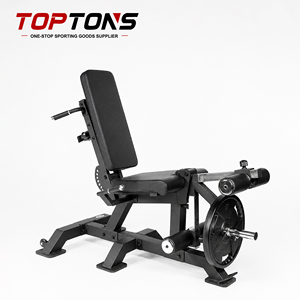
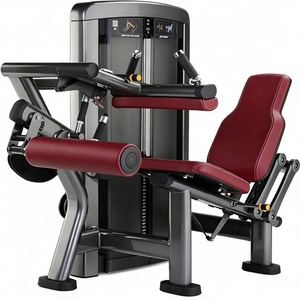
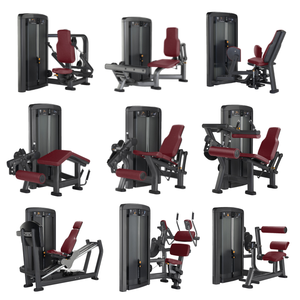
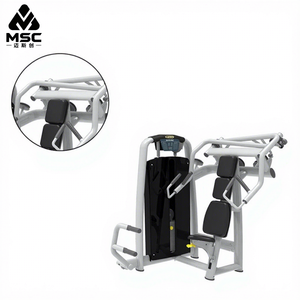
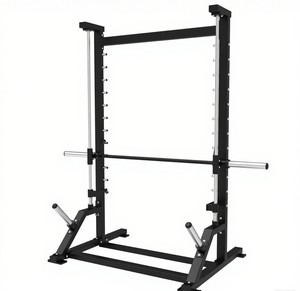
For commercial gym operators, institutional procurement officers, and global fitness equipment brands, selecting a manufacturing partner for leg extension machines requires a rigorous audit of biomechanical engineering, metallurgical integrity, and regulatory compliance. The European CE marking—specifically validated under EN ISO 20957-1 (General Safety Requirements) and EN ISO 20957-2 (Strength Training Equipment)—is not merely a operational stamp; it serves as a baseline guarantee of structural safety, dynamic load resistance, and biomechanical precision.
B2B Procurement Insight: A authentic CE Certified Leg Extension Machine must withstand static load testing at 2.5 times its maximal rated capacity without structural frame distortion or weld seam failure, combined with a dynamic fatigue threshold exceeding 100,000 continuous repetitions under full stack resistance.
Commercial-grade leg extension machines demand heavy-gauge structural tubing to resist frame torsional flex under maximal quadriceps exertion. Premium tier manufacturers utilize Q235B or Q355B cold-drawn structural steel tubing featuring dimensions of 50 x 100 mm or 60 x 120 mm with a minimum wall thickness of 3.0 mm (11-gauge). Lower-tier suppliers frequently substitute 2.0 mm or 2.5 mm tubing, which exhibits structural micro-flexing over prolonged high-frequency institutional use, leading to premature fatigue cracking at stress joints.
| Engineering Metric | Commercial Tier Grade (EN ISO 20957 Class S) | Light Commercial / Residential Grade |
|---|---|---|
| Steel Tube Gauge | 11-Gauge (3.0 mm) Q235B / Q355B Structural Steel | 14 to 12-Gauge (1.8 mm - 2.5 mm) Standard Steel |
| Weight Stack Guide Rods | Solid Hard-Chrome Plated Stainless Steel (Ground & Polished) | Hollow Carbon Steel Tubes with Flash Chrome Coating |
| Cable Assembly | 7x19 Strand Military-Spec Aircraft Cable (2000+ lbs Tensile Rating) | 7x7 Strand General Purpose Coated Wire (1000 lbs Rating) |
| Pulley Mechanism | Fiberglass Reinforced Nylon with Sealed Precision Bearings | Unreinforced ABS Plastic with Open Ball Bearings |
| Upholstery Foam | High-Density Polyurethane Injection Molded Foam (65 kg/m³) | Cut Rebonded Sponge (Low Density & Fast Deformation) |
The quadriceps muscle group exhibits a distinct strength curve during knee extension: human torque output peaks in the mid-range of flexion and naturally declines near terminal extension (0-degree lockout). Advanced OEM factories utilize customized variable resistance cams (variable-radius force cams) fabricated via precision laser cutting. This engineering guarantees that resistance dynamically matches the human strength curve, preventing excessive mechanical stress on the patellofemoral joint at the starting position while ensuring optimal neuromuscular activation throughout the complete Range of Motion (ROM).
Key biomechanical features required in elite institutional equipment include:
Automated dual-arm robotic welding cells deliver uninterrupted 360-degree structural seam welds, eliminating human inconsistency and guaranteeing frame joint failure resistance under heavy institutional loading.
Every leg extension series passes rigorous EU compliance audits. Certified under EN ISO 20957-1/2, covering pinch-point protection, emergency stop clearance, and structural load factors.
Utilizing a 5-stage automated zinc-phosphate wash followed by electrostatic double-layer powder coating. Provides high resistance against sweat corrosion, chipping, and scratch damage.
Commercial-grade 65kg/m³ high-density polyurethane injection molded pads finished in anti-bacterial, sweat-proof marine vinyl, guaranteeing retention of structural shape after years of continuous use.
Full customization covering custom frame color matching (RAL system), laser-cut brand logo plates, custom upholstery embroidery, and tailored weight stack sizing from 80kg to 140kg.
Optimized flat-pack container loading designs reduce sea freight cubic volume by up to 35%, protected by multi-layer foam wrapping and heavy-duty reinforced wooden crates.
The global commercial strength equipment procurement landscape is undergoing a technological and operational shift. Sourcing directors and commercial gym equipment distributors must align their supply chains with four critical emerging trends:
Next-generation CE certified leg extension factories are integrating digital tracking sensors directly into selectorized weight stacks. Utilizing Bluetooth Low Energy (BLE) and RFID smart pins, modern leg extension machines collect real-time data on repetition velocity, cumulative volume, range-of-motion completion, and mechanical cable tension. B2B buyers now seek OEM suppliers offering pre-routed internal cabling conduits for sensor retrofitting.
As commercial fitness space costs per square meter rise globally, high demand is shifting toward dual-function units such as the Seated Leg Extension / Seated Leg Curl Combo Machine. However, engineering a CE-compliant dual machine requires complex dual-cam mechanisms and dual pivot axes to preserve true biomechanical movement without introducing knee joint leverage strain. Leading factories utilize quick-release pin selectors to alter arm geometry rapidly between extension and flexion modes.
With environmental regulations expanding globally, the European Union's Carbon Border Adjustment Mechanism (CBAM) requires fitness equipment manufacturers to document the carbon intensity of imported raw steel components. Top-tier Chinese and international factories are transitioning to electric arc furnace (EAF) steel, eco-friendly solvent-free powder coatings, and 100% recyclable packaging materials to lower carbon footprint compliance costs for international importers.
While traditional steel weight stacks remain the industry standard for raw power output, hybrid pneumatic (air resistance) leg extension machines are entering elite sports science and medical recovery facilities. Factory suppliers with strong R&D teams are combining traditional iron weight stacks with digital pneumatic fine-tuning increments of 0.5 kg, optimizing variable load delivery during explosive power concentric movements.
You should request the official CE Declaration of Conformity (DoC) along with third-party test reports validating compliance with EN ISO 20957-1:2013 and EN ISO 20957-2:2021 issued by an accredited ISO/IEC 17025 testing body (such as TÜV, SGS, or Intertek). Avoid factories relying solely on self-certified declarations without underlying lab test reports.
Standard factory MOQs for custom frame color paint, custom brand logo plates, and custom upholstery embroidery typically start at 5 to 10 units per specific model, or a combined minimum order value equivalent to one 20ft container (approx. 24-28 CBM) across full strength machine lines.
Tier-1 manufacturers employ automated pneumatic cycle testers that continuously perform leg extension repetitions under a 120% maximal weight stack load at 1.0 Hz frequency. Quality pass criteria require over 500,000 continuous dynamic cycles without cable strand fraying, nylon pulley melting, or guide rod wear.
Commercial facilities (Class S under EN ISO 20957) require structural steel tubing with a wall thickness of 3.0 mm (11-gauge). Light commercial equipment (2.0 mm to 2.5 mm) is suitable only for hotel or corporate wellness centers with low daily user frequency.
Standard factory manufacturing lead time for a full container load (FCL) of strength machinery is typically 30 to 45 calendar days following sample sign-off and deposit receipt. OEM customized tooling or custom cast cam molds may add 15-20 days to initial prototype development.
Reliable factories execute a multi-layer corrosion prevention process: First, zinc-phosphate surface conversion coating; second, electrostatic powder coating; third, vacuum-sealed plastic wrap containing moisture-absorbing VCI (Vapor Corrosion Inhibitor) packets inside heavy-duty corrugated cartons or plywood cases.
Yes. Standard leg extension machines feature a 1:1 mechanical advantage ratio. However, factories can customize pulley reeving to offer a 2:1 or 1:2 pulley mechanical advantage to meet specific physical therapy, rehabilitation, or high-velocity strength application requirements.
A reputable factory should provide a warranty structure comprising: 10 years on structural main steel frame welding, 3 years on rotary bearings, pulleys, and solid weight stacks, and 1 year on wear items such as cables, upholstery pads, and linear bushings.
Expand your commercial machinery distribution lineup or upgrade your facility with custom engineered, EN ISO 20957 compliant leg extension machines.