
In modern commercial strength and conditioning facilities, high-density free-weight storage is no longer viewed merely as secondary furniture. It constitutes a vital component of risk management, floor space optimization, and workflow ergonomics. Procurement specialists, facility architects, and international distributors searching for verified CE certified dumbbell storage rack factories & suppliers must look beyond basic aesthetic appeal to rigorously analyze structural metallurgy, static versus dynamic loading margins, welded joint fatigue resistance, and non-toxic surface treatments.
Under the strict parameters of European Standard EN ISO 20957-1 (Stationary training equipment — General safety requirements and test methods), commercial storage racks deployed in institutional environments are classified under Usage Class S (Studio/Commercial). Compliance demands that dumbbell storage racks sustain a minimum safety overload coefficient of 2.5x their rated capacity without suffering permanent plastic deformation or joint weld shear failure. This whitepaper establishes a authoritative technical baseline evaluating manufacturing practices, material specifications (Q235 vs. Q355 structural steel), cradle geometry, and future OEM procurement vectors.
Engineered by verified OEM/ODM manufacturing facilities utilizing robotic MIG welding, laser-cut tray profiles, and industrial electrostatic powder coating.
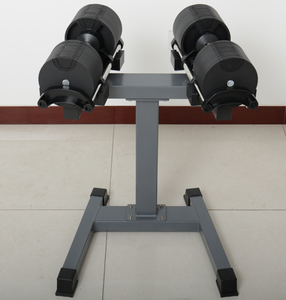
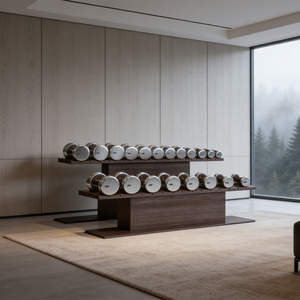
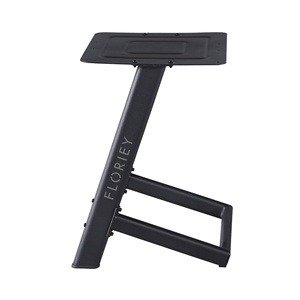
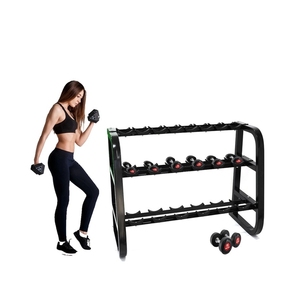
The global fitness equipment storage market is undergoing a significant transformation driven by ergonomic science, material safety compliance, and architectural integration in high-performance sports facilities.
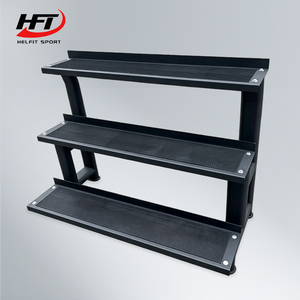
Traditional flat 90-degree storage trays create wrist strain during heavy weight racking and un-racking operations. Modern CE-certified manufacturers are standardizing 15-degree to 20-degree forward-tilted tray angles. This angle aligns with natural wrist biomechanics, significantly reducing lower back shear stress and preventing finger pinch injuries—a critical requirement for institutional risk containment in high-traffic facilities.
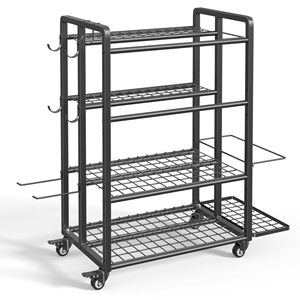
Commercial gym operators are shifting away from single-purpose racks toward integrated modular systems. Leading factories now engineer unified storage hubs capable of housing dumbbells, kettlebells, medicine balls, resistance bands, and foam rollers on a single structural frame. This modularity increases floor space utilization by up to 35% in collegiate and tactical conditioning spaces.
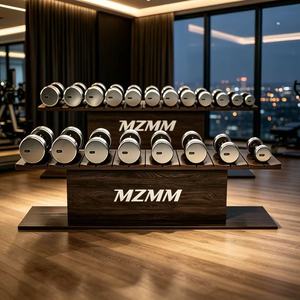
As seen in boutique luxury studios and high-end hotel wellness suites, solid hardwood integration (such as FSC-certified Red Oak and North American Walnut) combined with structural steel sub-frames represents a rapidly growing segment. Manufacturers must ensure these wood hybrid racks undergo thermal stabilization to prevent warping while retaining structural loading ratings above 500kg.
| Evaluation Parameter | Standard Commercial Grade | CE Certified Institutional Grade (Power Lift Spec) | Procurement Impact |
|---|---|---|---|
| Steel Tube Gauge | 14-Gauge (2.0mm thickness) | 11-Gauge to 7-Gauge (3.0mm - 4.5mm Q235/Q355 Steel) | Eliminates structural flexing under maximum weight load. |
| Safety Overload Rating | 1.5x Rated Static Load | 2.5x Dynamic & Static Load (EN ISO 20957-1) | Prevents sudden catastrophic structural collapse. |
| Surface Coating Technology | Single-pass Solvent Paint | Dual-Stage Electrostatic Powder Coat (Zero VOC) | Resists chipping, corrosion, and sweat breakdown (500hr Salt Spray). |
| Dumbbell Protection | Bare Metal Angles / Hard PVC | Heavy-Duty Thermoplastic Polyurethane (TPU) Saddles | Protects dumbbell knurling and urethane coatings from damage. |
| Base Stabilization | Plastic End Caps | Heavy-Duty Rubber Footpads & Bolt-Down Flanges | Protects facility flooring and prevents rack migration under impact. |
Built upon decades of manufacturing expertise in Jefferson, Iowa and advanced international manufacturing partnerships, our enterprise supplier network delivers turnkey solutions for commercial athletic facilities, university strength centers, and global fitness brands.
Every step of the manufacturing lifecycle—from 3D CAD stress modelling (Finite Element Analysis) and CNC fiber laser tube cutting to robotic MIG joint welding and electrostatic powder curing—is executed under ISO 9001 quality management protocols. Customization capabilities include custom laser-cut brand plates, high-precision RAL color matching, multi-tier tray length adjustments, and custom floor-anchor configurations.

Crucial technical considerations for institutional buyers, equipment procurement managers, and commercial gym designers.
Under European Safety Standard EN ISO 20957-1 / EN 957-2, CE certification for storage equipment requires rigorous structural auditing. This includes static load testing at 2.5 times the maximum intended payload without frame deformation, dynamic drop testing to simulate aggressive weight placement, sharp edge and corner radius checks (minimum 2.5mm radius), and chemical testing of surface coatings to ensure non-toxicity (RoHS and REACH compliance).
To prevent rack overcrowding and hand interference, tray length calculations must account for the specific dumbbell media type. Commercial CPU/Urethane dumbbells generally require 130mm to 160mm of horizontal tray clearance per dumbbell, whereas cast iron hex dumbbells require 110mm to 140mm. OEM factories provide customized tray length specs (e.g., 2-meter or 3-meter continuous runs) tailored specifically to a client's weight increment list (e.g., 5lb to 100lb pairs).
Q235 carbon structural steel offers excellent weldability and ductileness, making it standard for high-quality commercial racks with 3mm wall thickness. Q355 high-strength alloy steel exhibits a significantly higher yield strength (355 MPa vs 235 MPa), allowing heavy-duty multi-tier racks to hold extreme weight concentrations (exceeding 2,000 lbs per section) with slimmer structural profiles and enhanced fatigue failure resistance.
Premium suppliers implement a multi-stage surface preparation protocol. Steel tubing is first shot-blasted to remove mill scale, followed by an iron-phosphate wash. The rack receives a zinc-rich primer coat followed by an electrostatically applied thermosetting powder topcoat cured at 200°C. This dual-layer finish withstands over 500 hours of continuous salt spray testing under ASTM B117 standards.
Yes. Custom OEM/ODM programs allow institutional buyers and brand owners to specify custom RAL powder-coat colors, laser-etched stainless steel logo plates, custom rubber branding badges, and heavy-duty ISPM-15 compliant wooden crate packaging optimized for containerized ocean freight.
Connect directly with our engineering and procurement team to access 2D/3D CAD files, CE compliance certification documentation, volume pricing schedules, and custom facility layout design support.